Palace Pandemonium
- Buckingham Palace
- 1914
Panic on the streets of London: a women's suffrage protest breaks into violence.
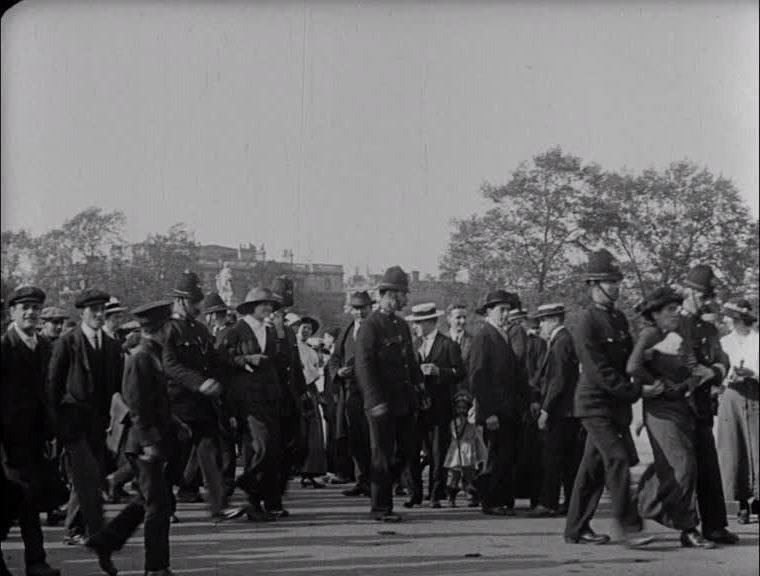
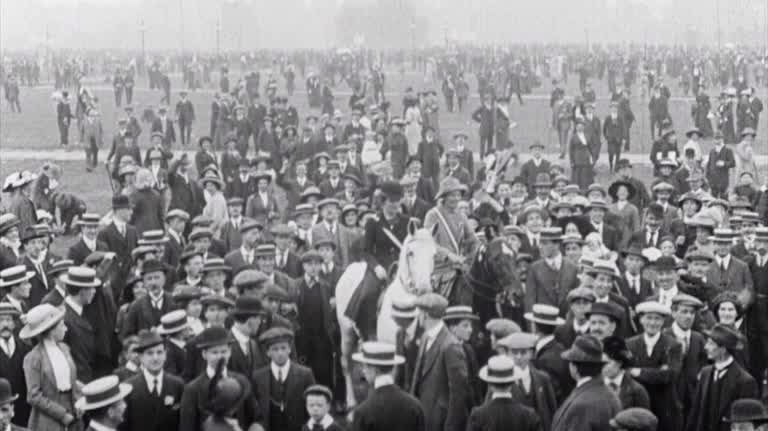
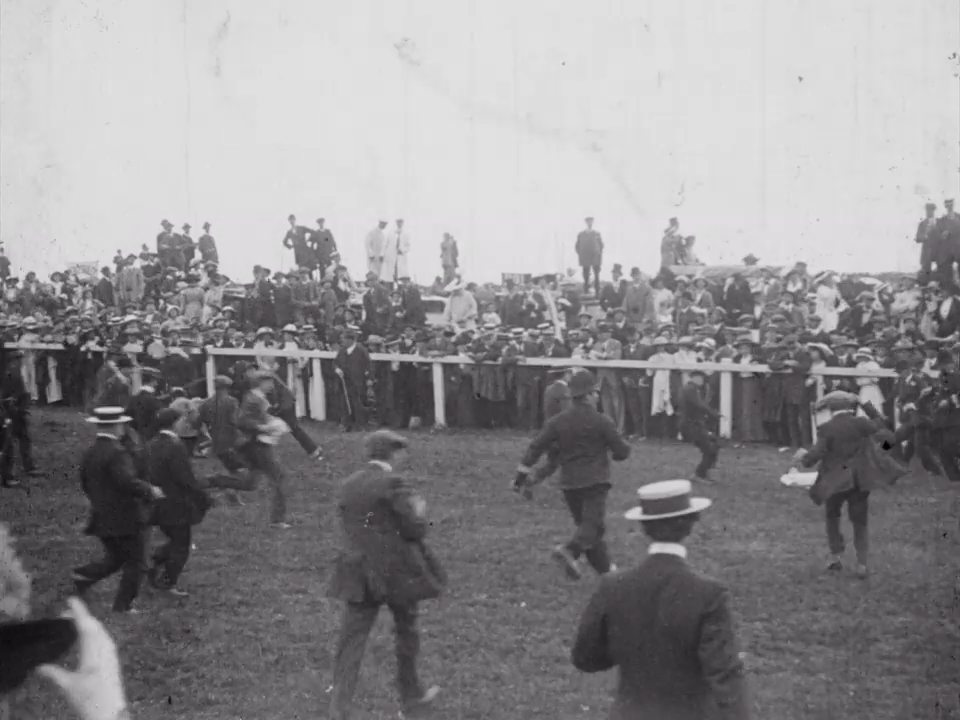
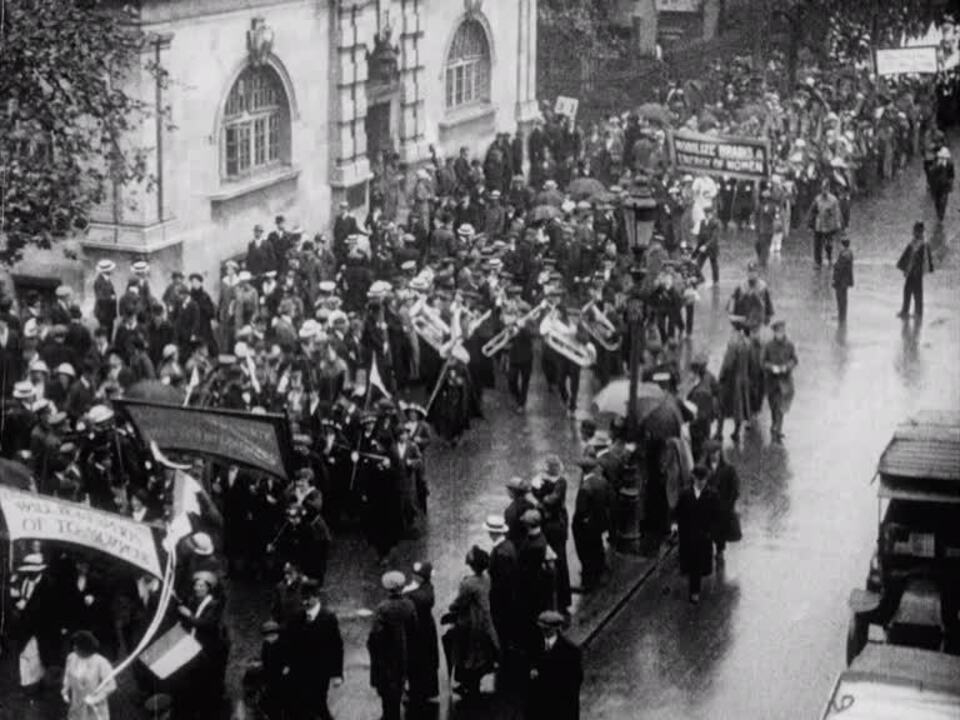
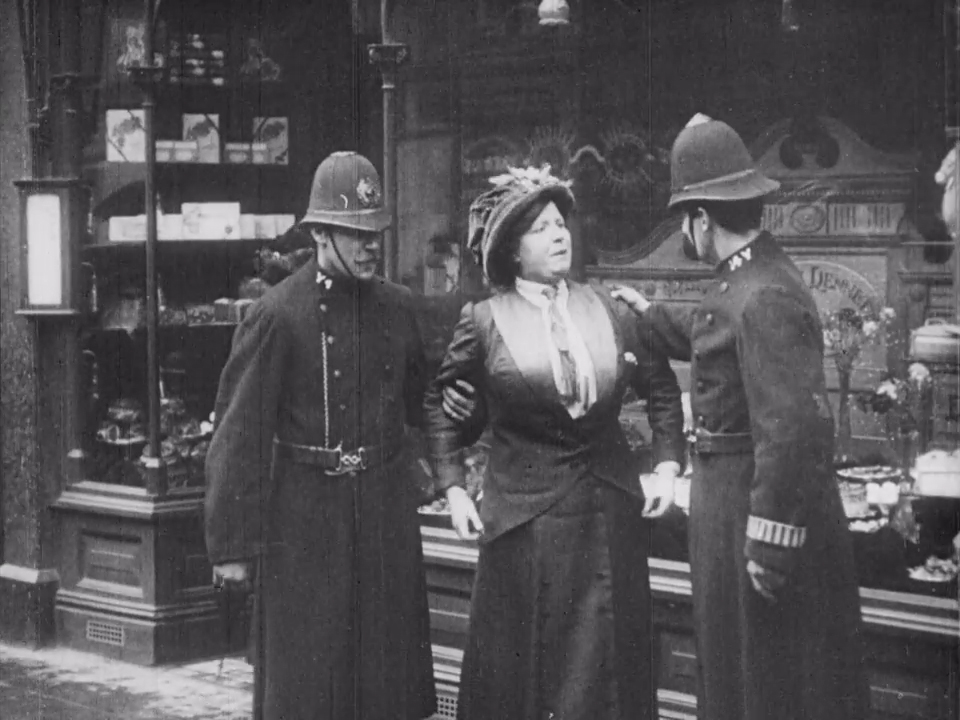
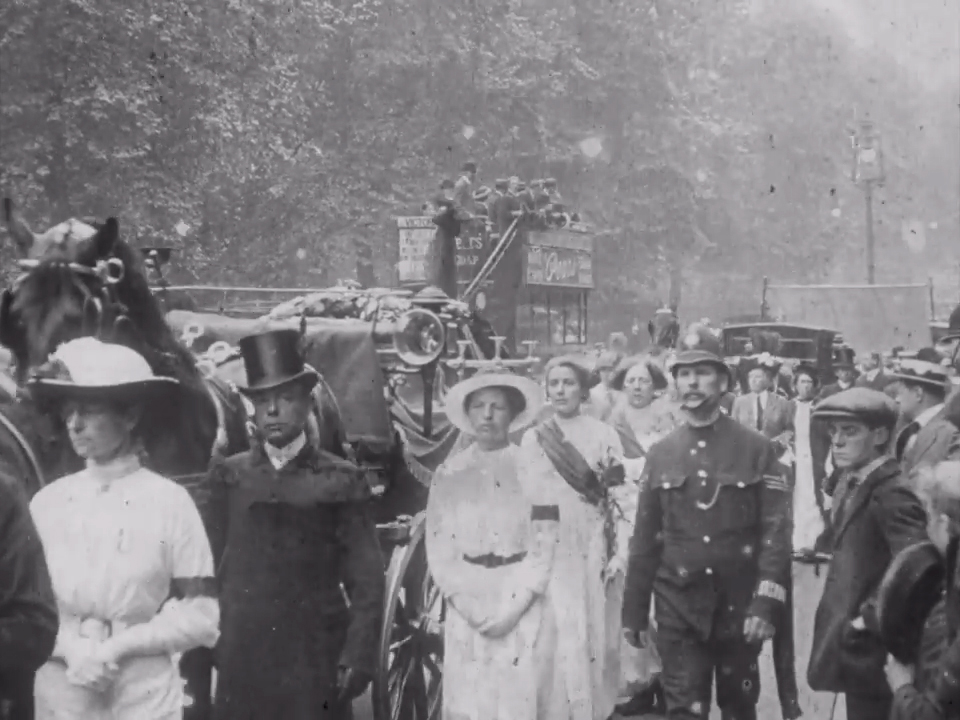
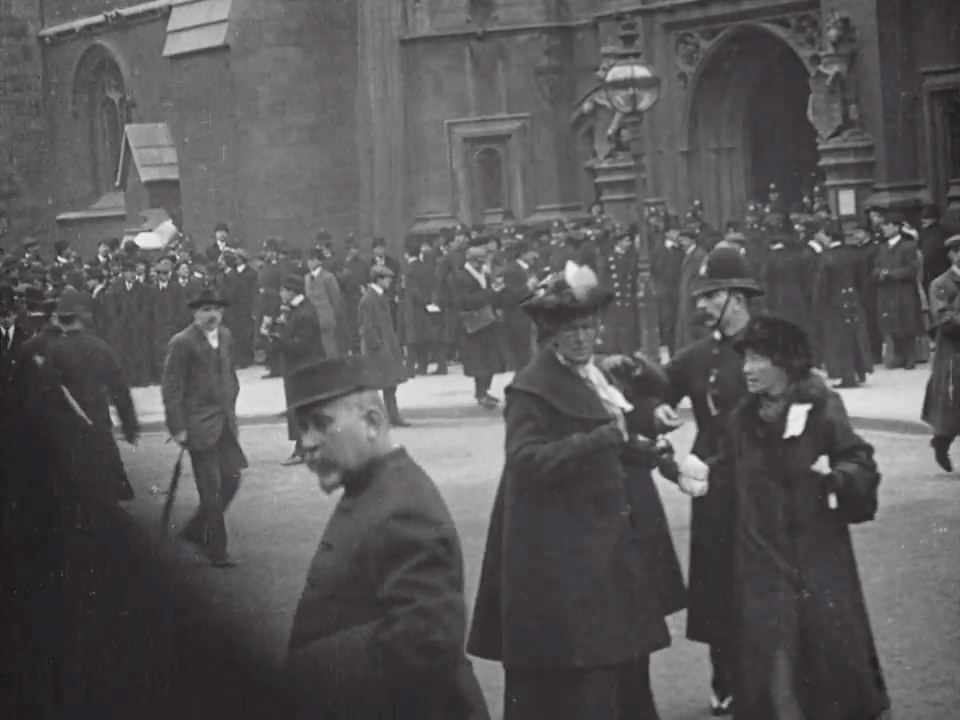
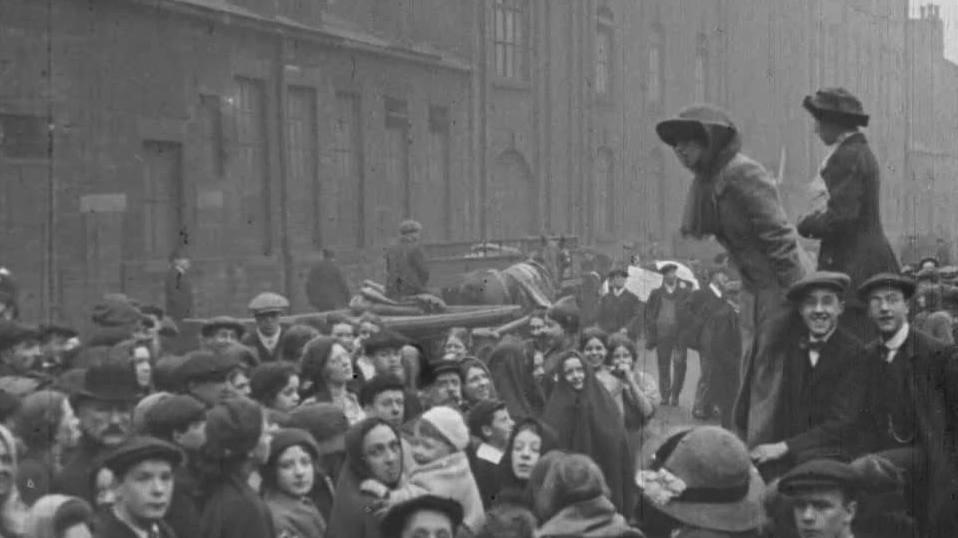
Hundreds of women were injured - and many arrested - in the fierce confrontations with police on 18 November, dubbed 'Black Friday'. This newsreel taken on that day gives a partial account. Women campaigning for the vote assembled outside Parliament in the wake of the failure of the Conciliation Bill (the first of three unsuccessful attempts by the Liberal government to extend the vote to property-owning women). But their protest turned violent as the crowds surge into the police cordon.
Newsreel companies were expert planners, and scheduled, predictable news (such as an advertised protest) was their mainstay. Camera operators would be posted to the best vantage points, and in good time to catch the action. But something's amiss with this report: unusually, it's compiled from awkward shots half peering over the heads of bystanders estranged from the kerfuffle. Maybe everything unfolded too quickly? Or the equipment was too cumbersome to adapt to the event's rapidly escalating violence?
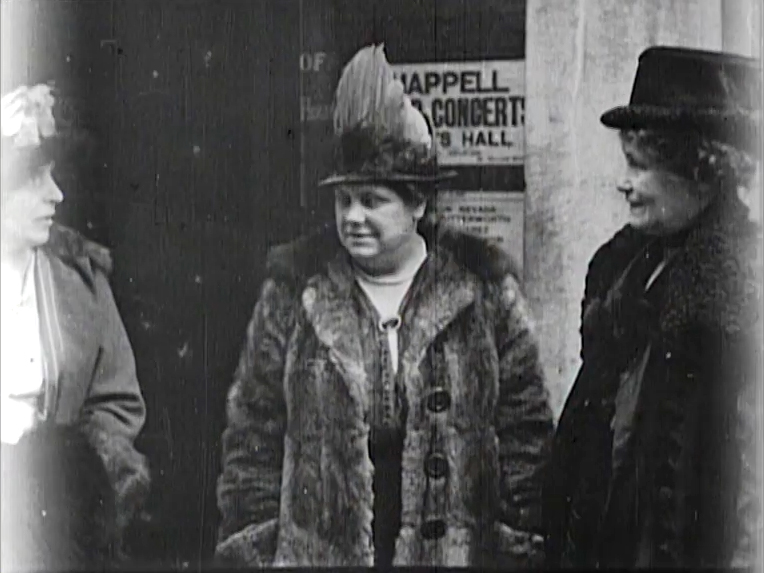
"You have to make more noise than anybody else!," cried Suffragette pioneer Emmeline Pankhurst. But how to make more noise in silent film?
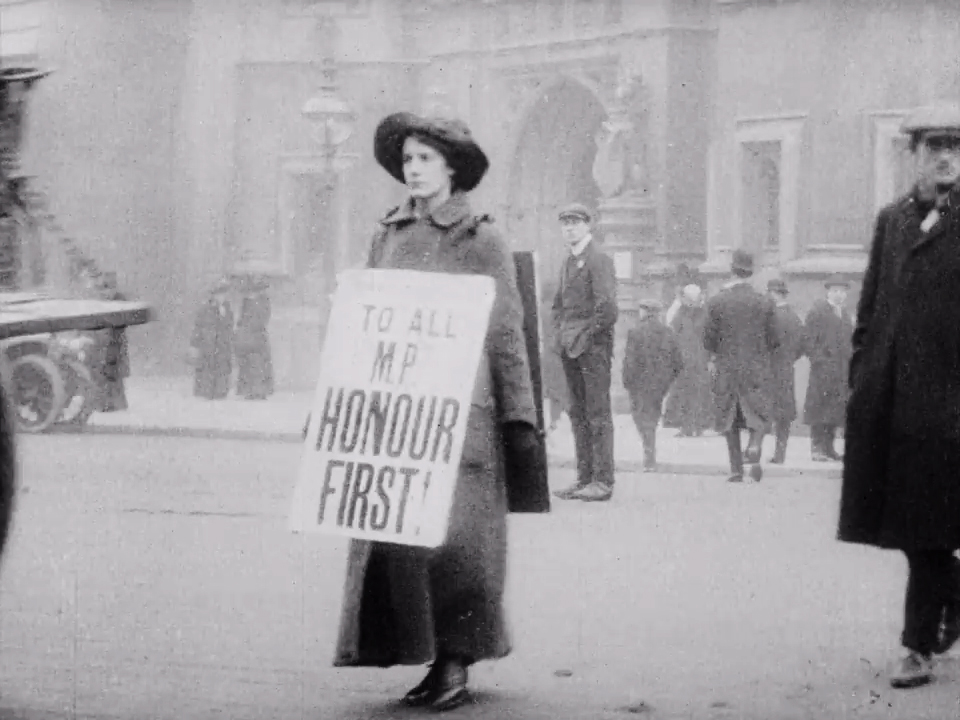
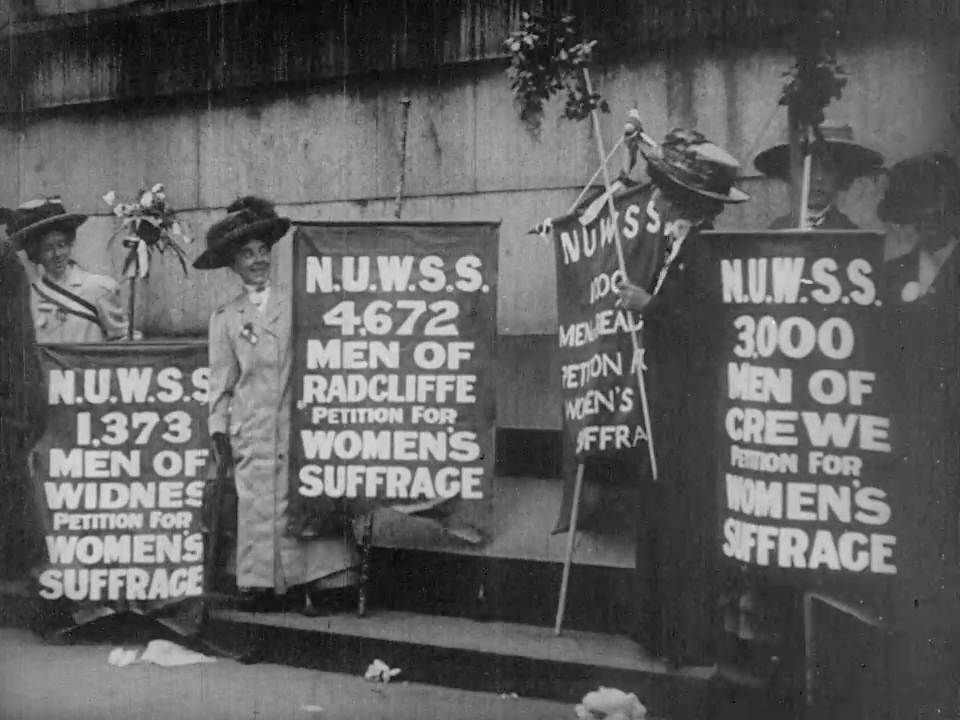
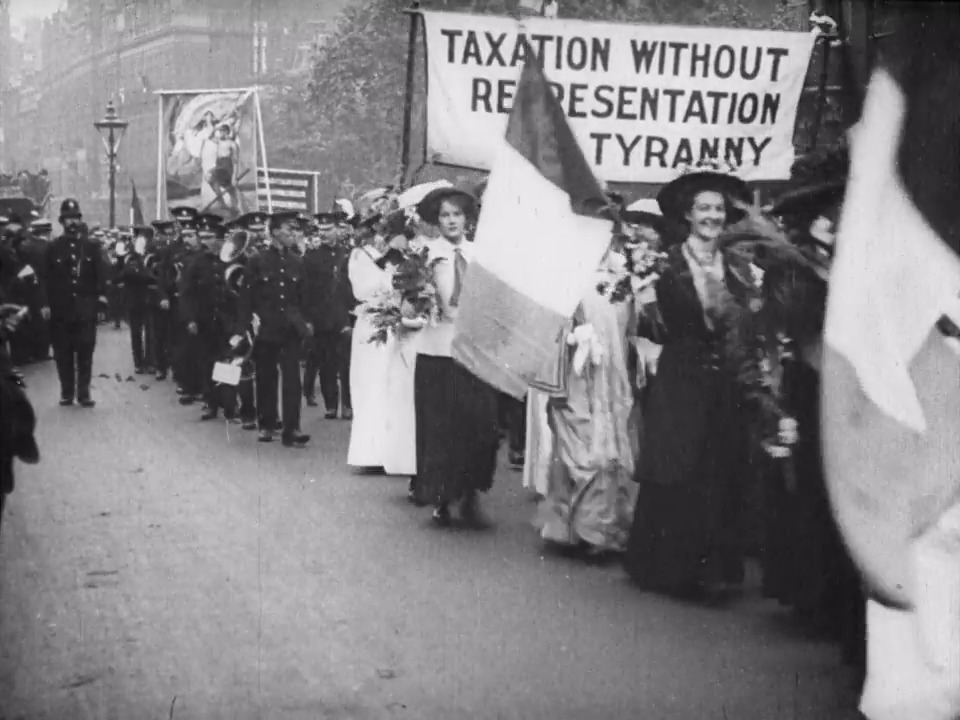
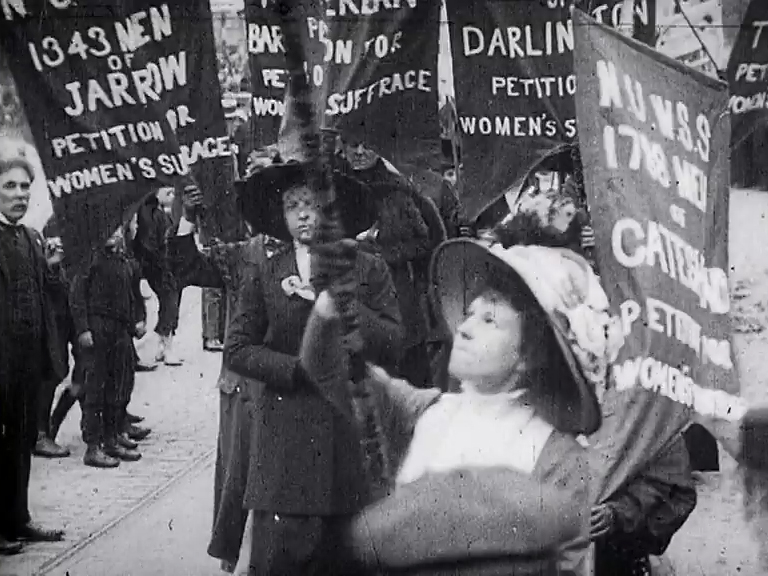
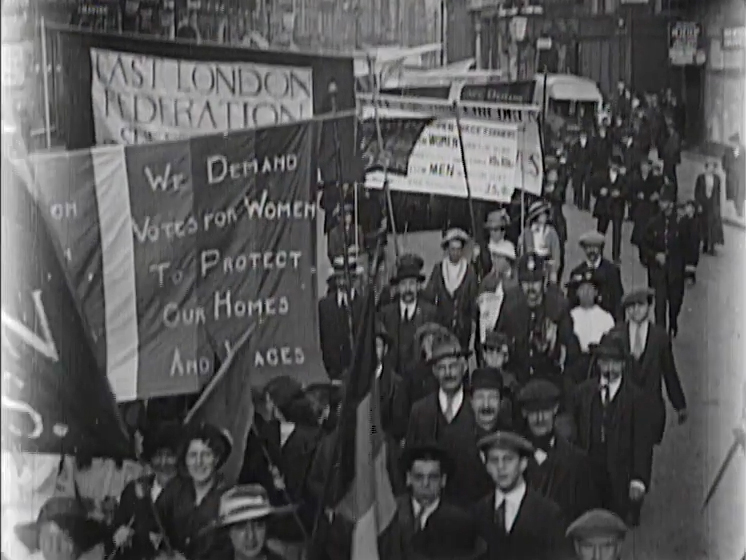
Pankhurst's strategy was simple but clever: at every public meeting or gathering, Suffragettes should stand up and shout "votes for women!". But how to make more noise in silent film? With moving images becoming increasingly important, the suffragettes needed to be not just heard, but seen. Newsreels were noticeably more neutral in their reporting than newspapers, so their cameramen were invited to big demonstrations, where banners and placards were carefully placed for the cameras.
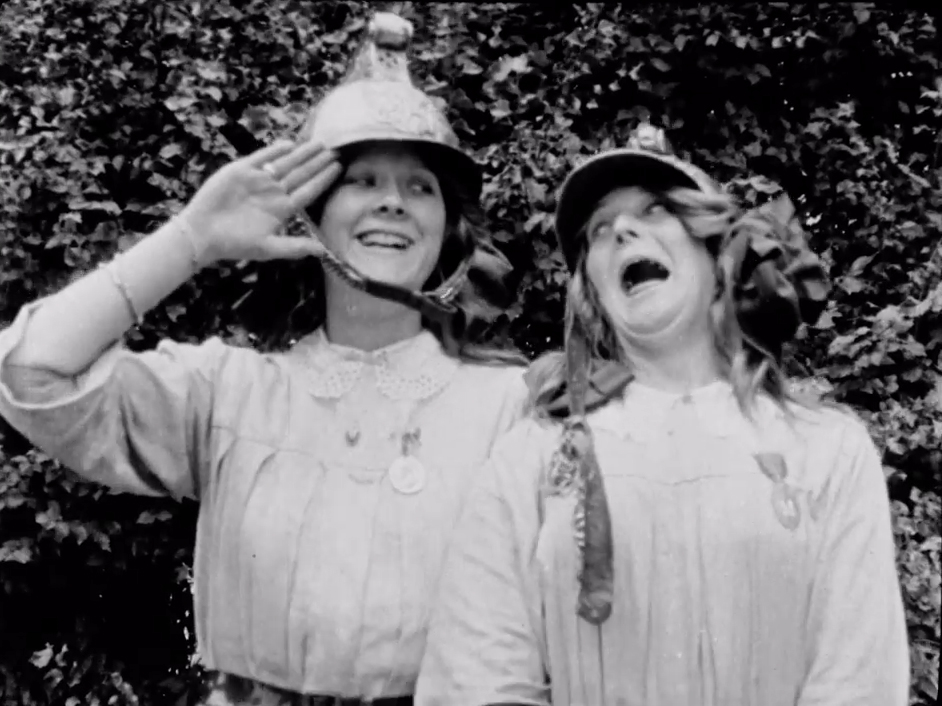
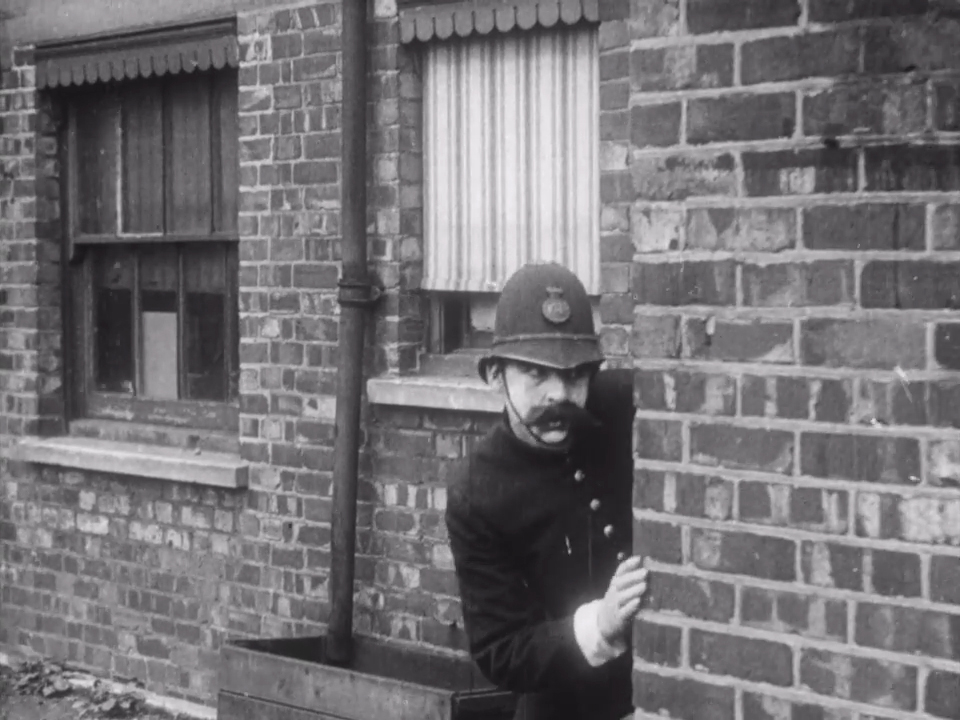
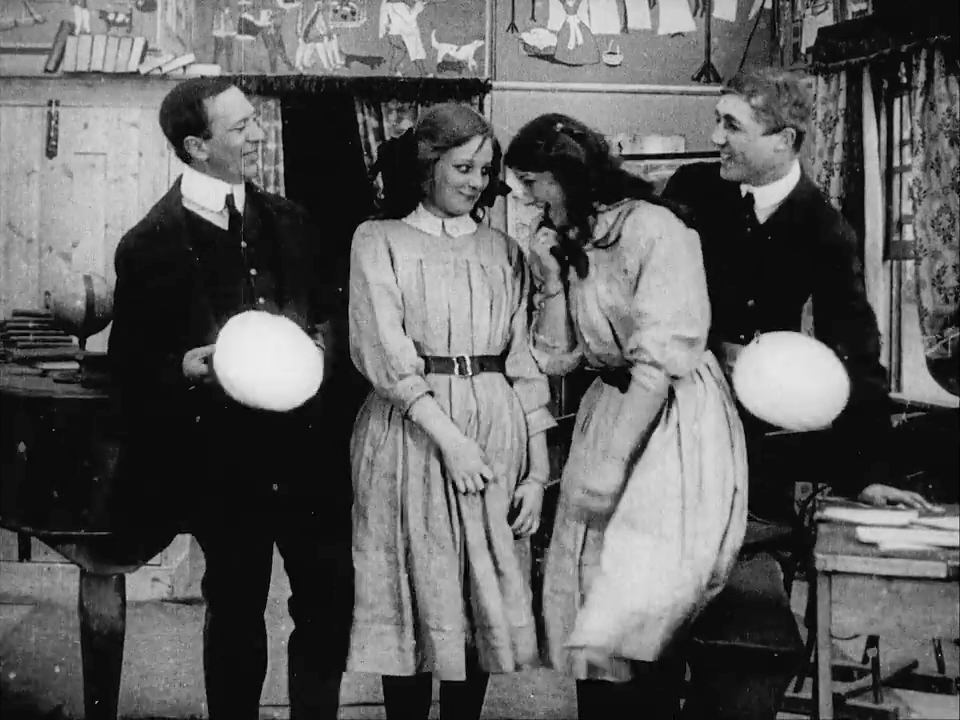
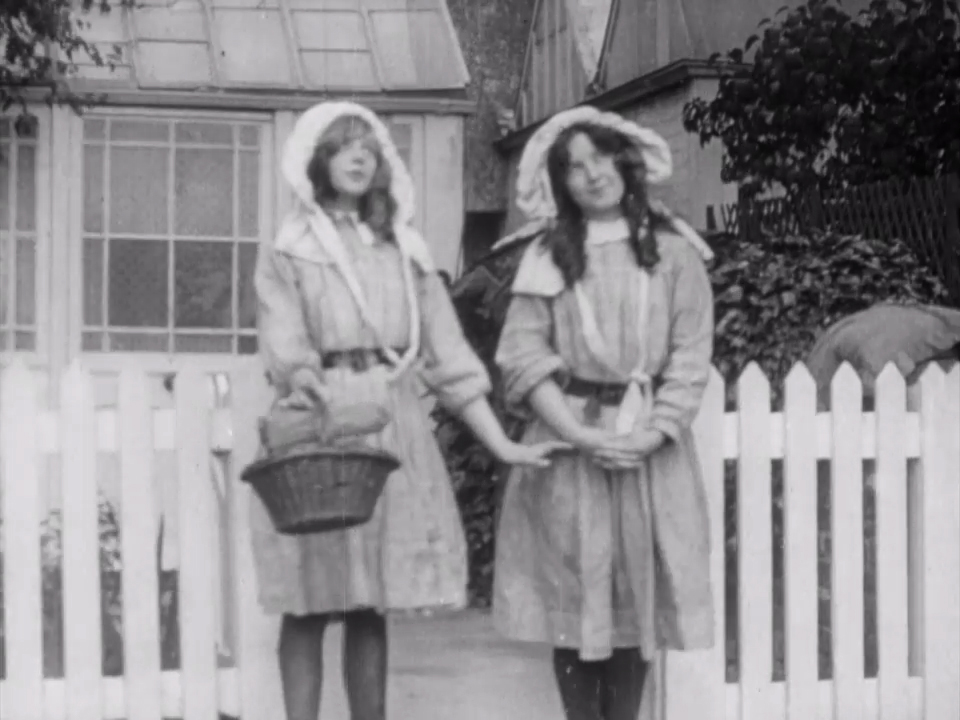
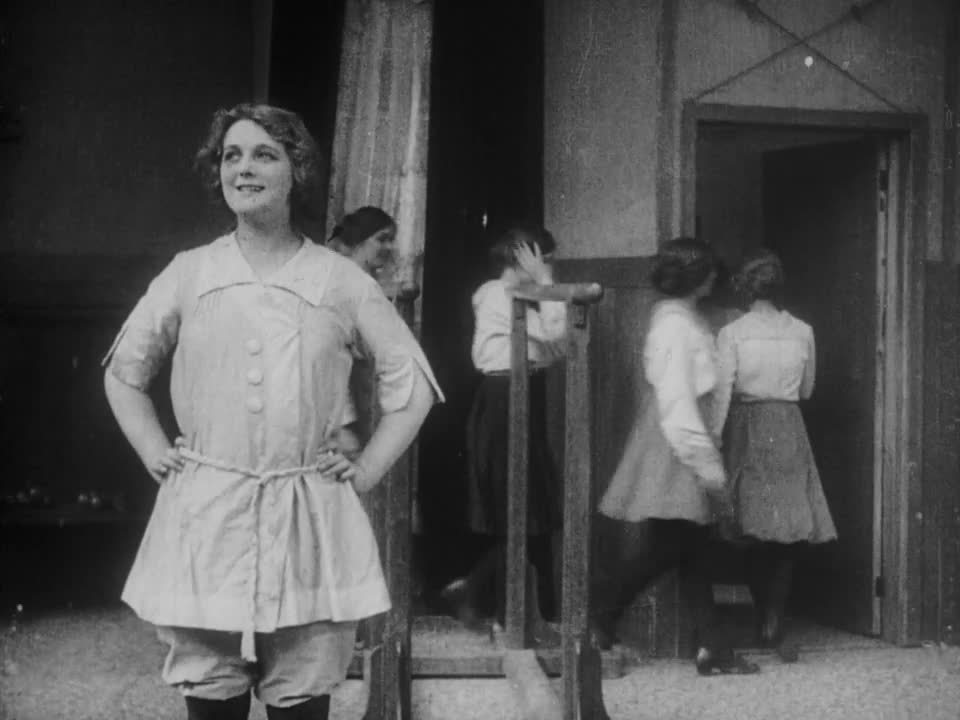
Suffragettes (often played by men in drag) were common objects of ridicule in film comedies. But some characterisations were more ambiguous, and comedy could even - sometimes - give its female protagonists the freedom to make one hell of a noise.