Palace Pandemonium
- Buckingham Palace
- 1914
The fight for women's suffrage momentarily falters on a gloomy day in January 1913.
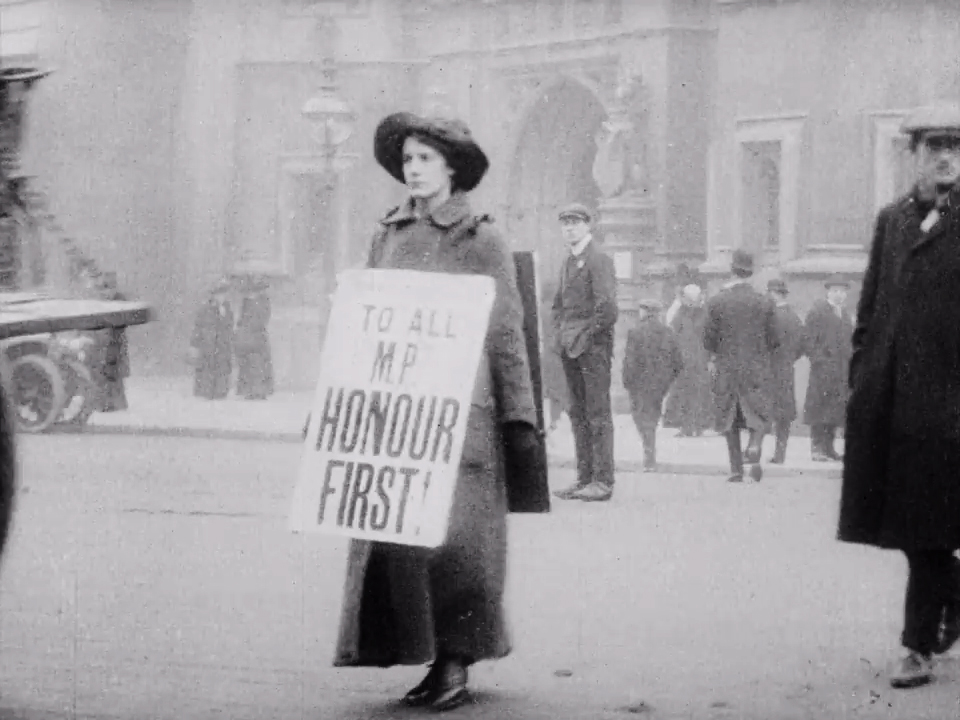
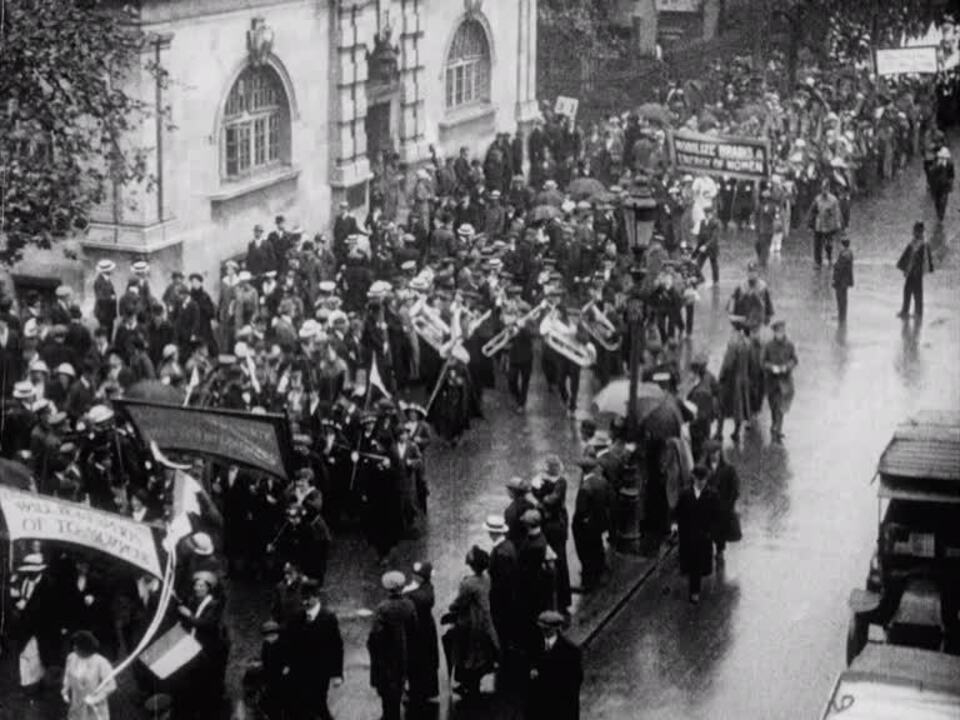
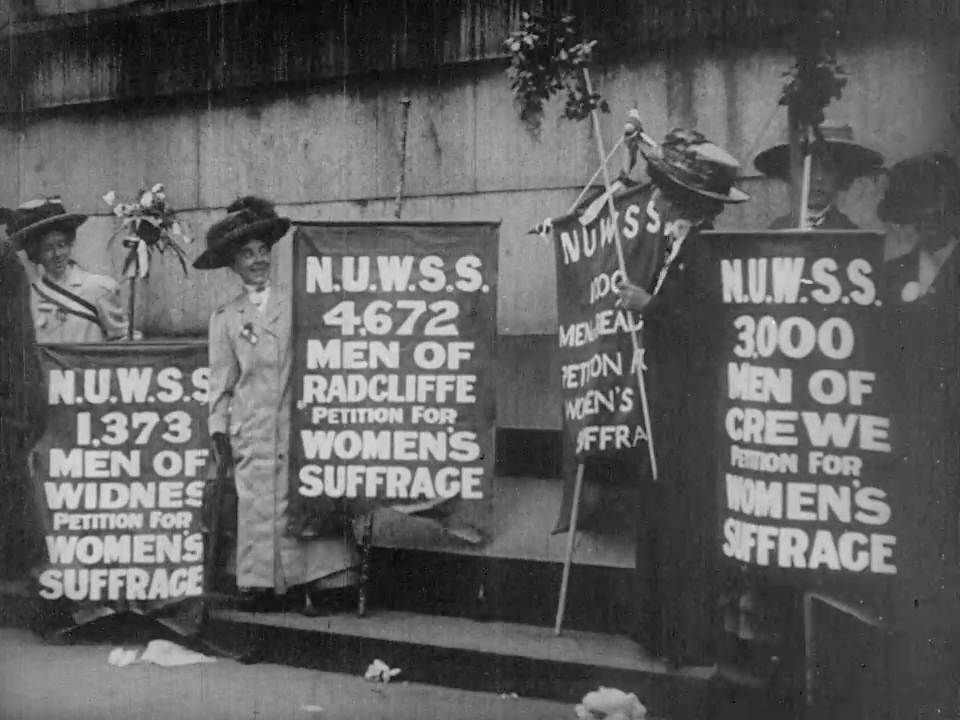
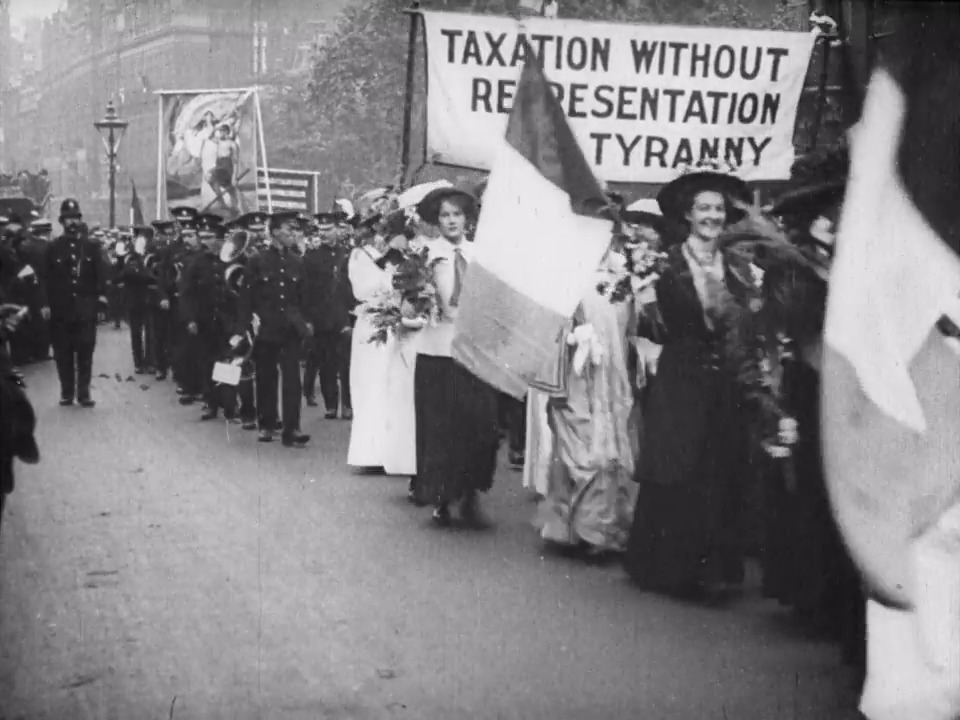
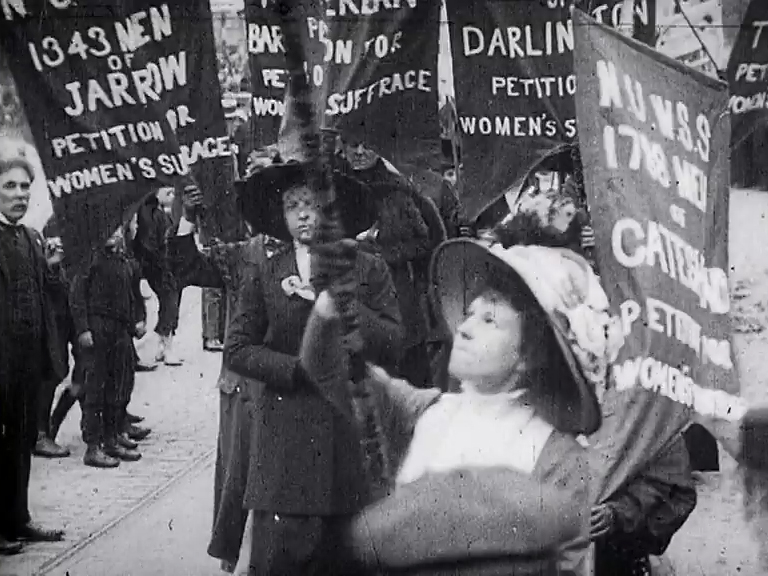
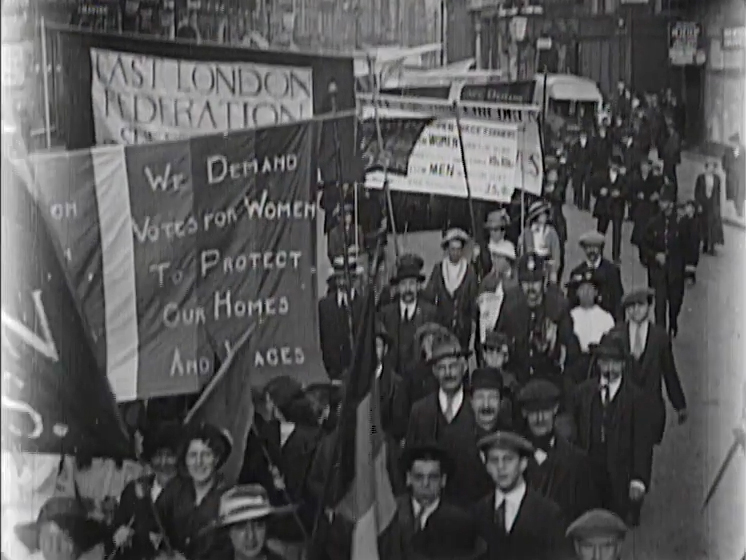
The mood must have been as bleak as the weather on 27 January 1913, a gloomy day for supporters of women's suffrage. The hopes of these placard-bearing women had been dashed after the Franchise and Registration Bill was withdrawn in the House of Commons. Had it been amended, as the women expected, it would have been a significant step towards enfranchisement.
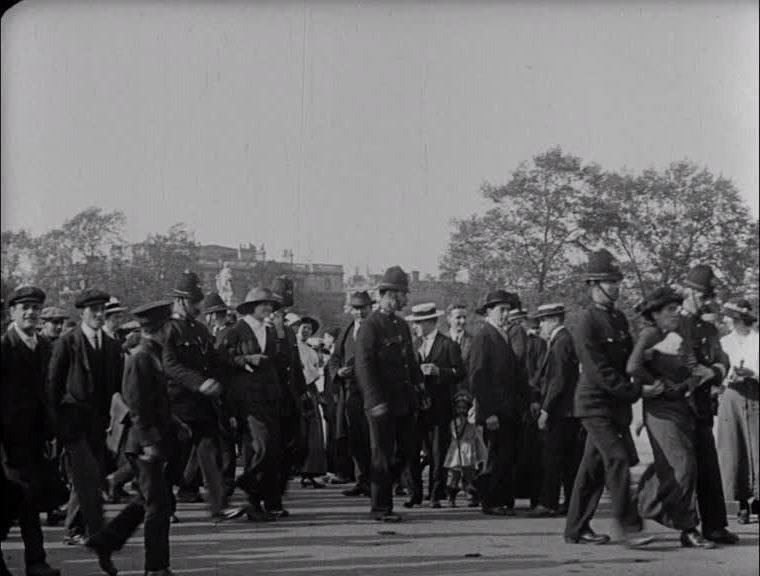
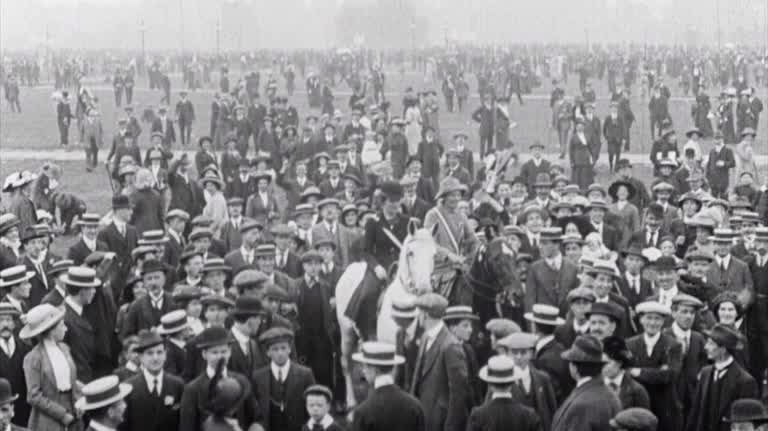
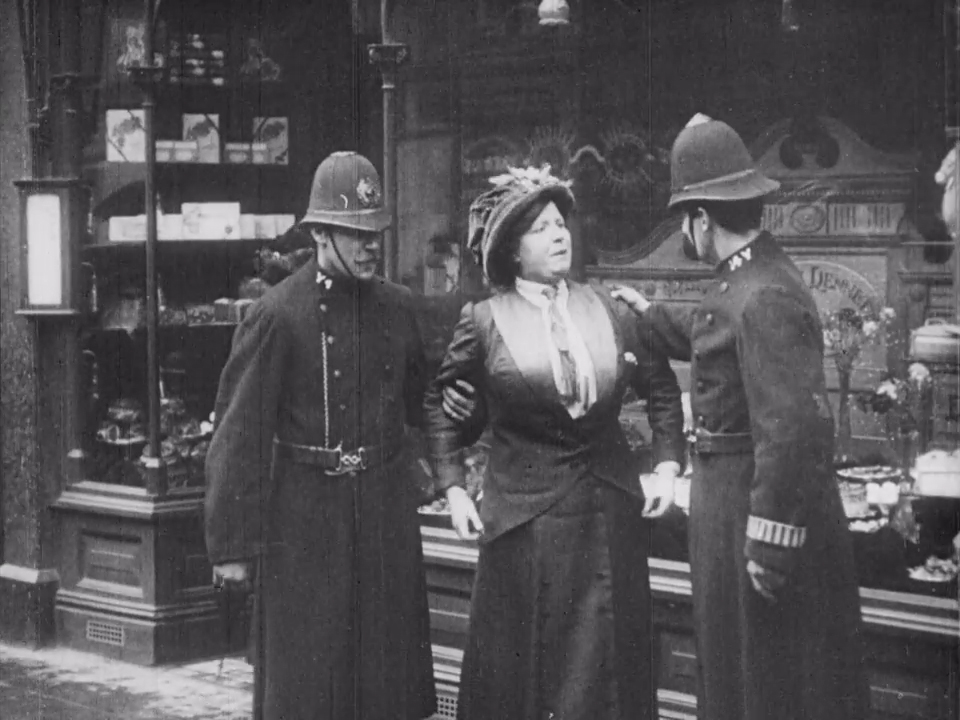
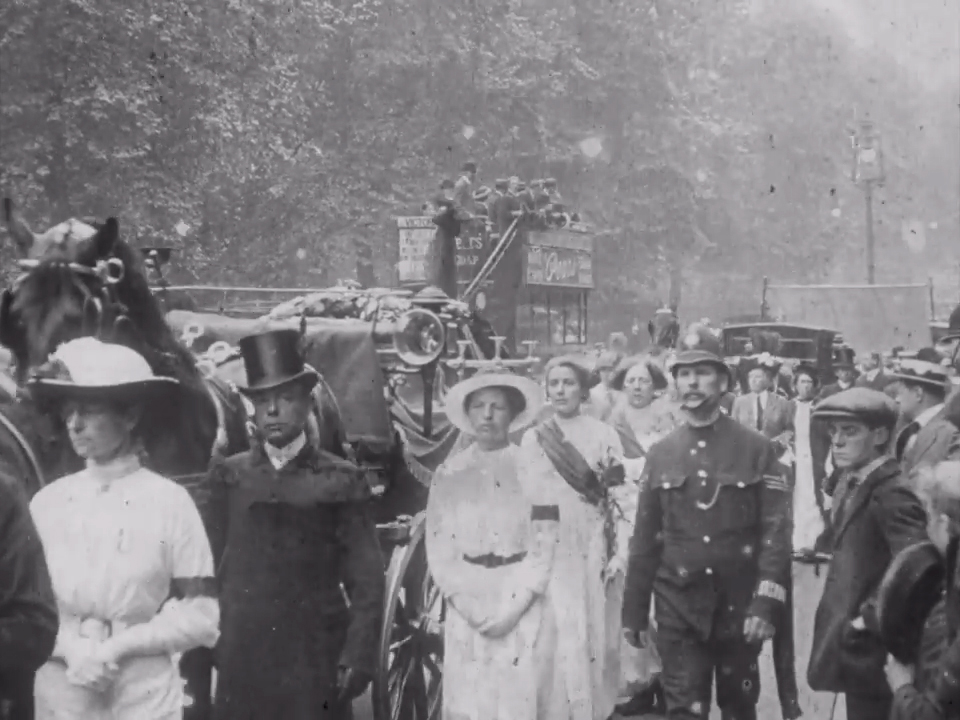
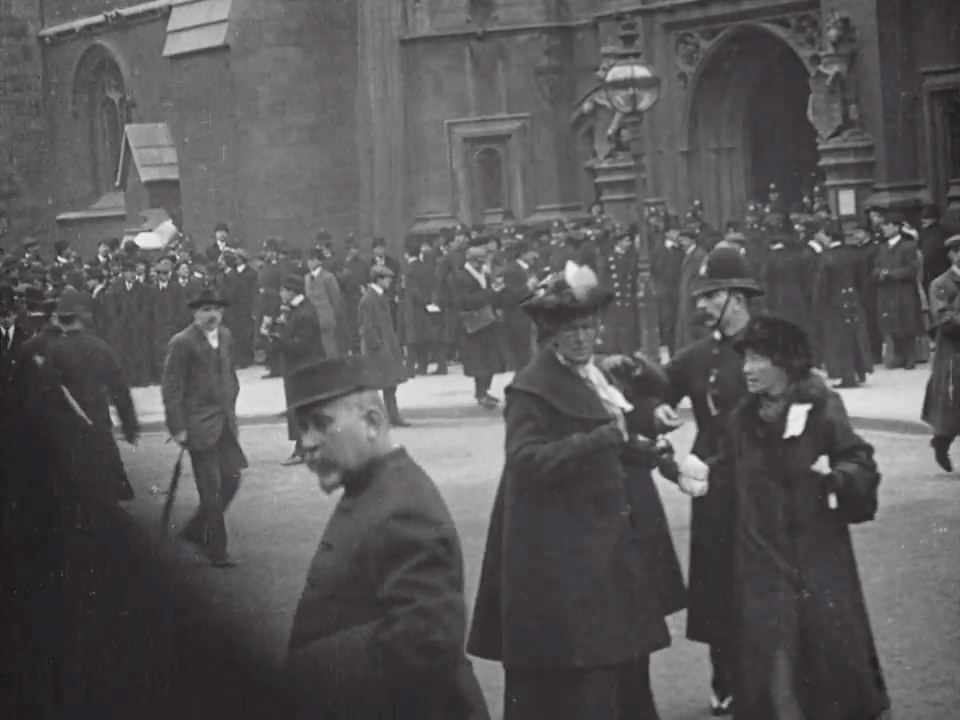
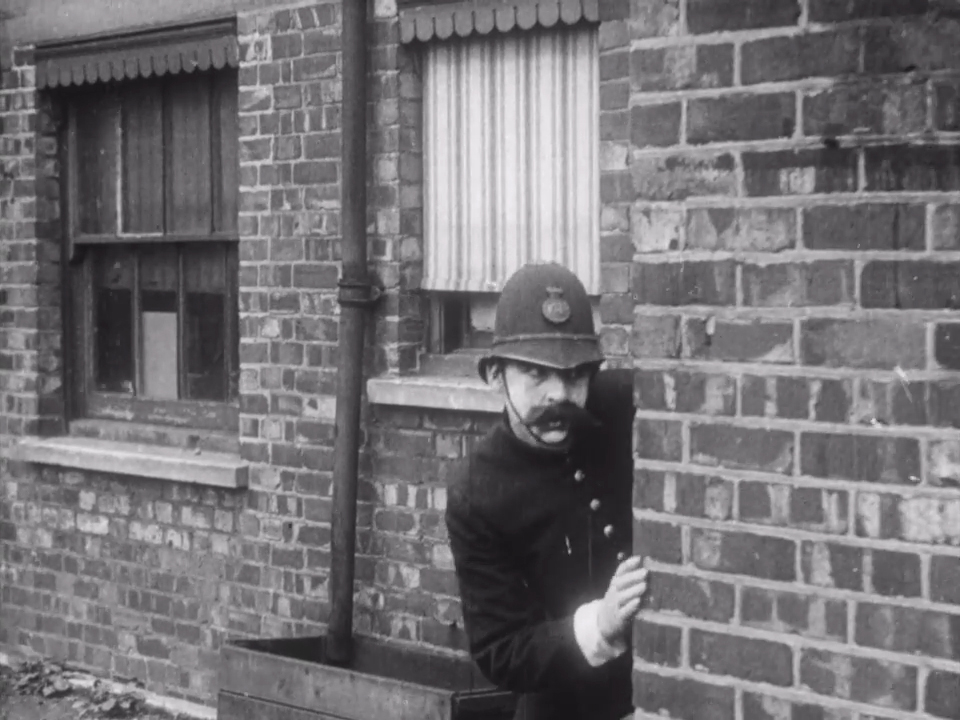
These newsreel scenes show the policemen swarming the streets of Westminster prepared to quash violent protests. As it happened, according to a contemporary Guardian newspaper report: "women showed no sign of an organised attack, and after a time the crowd became weary of waiting for something and melted away".
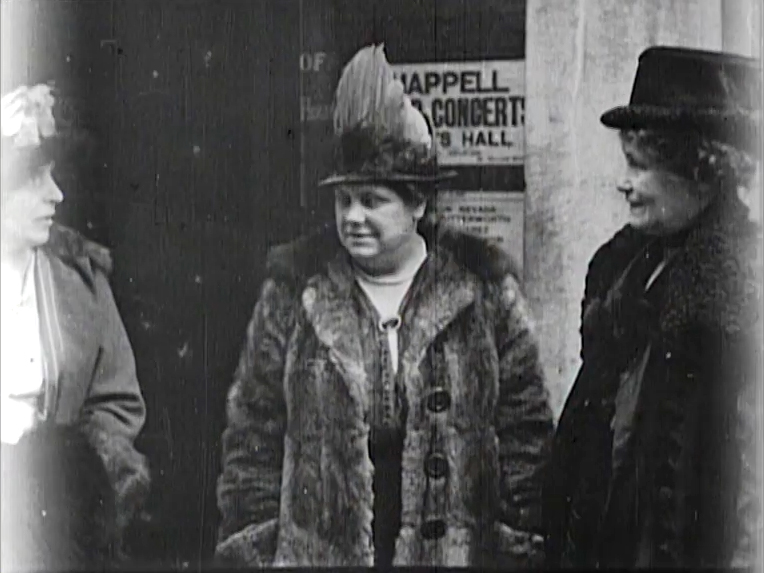
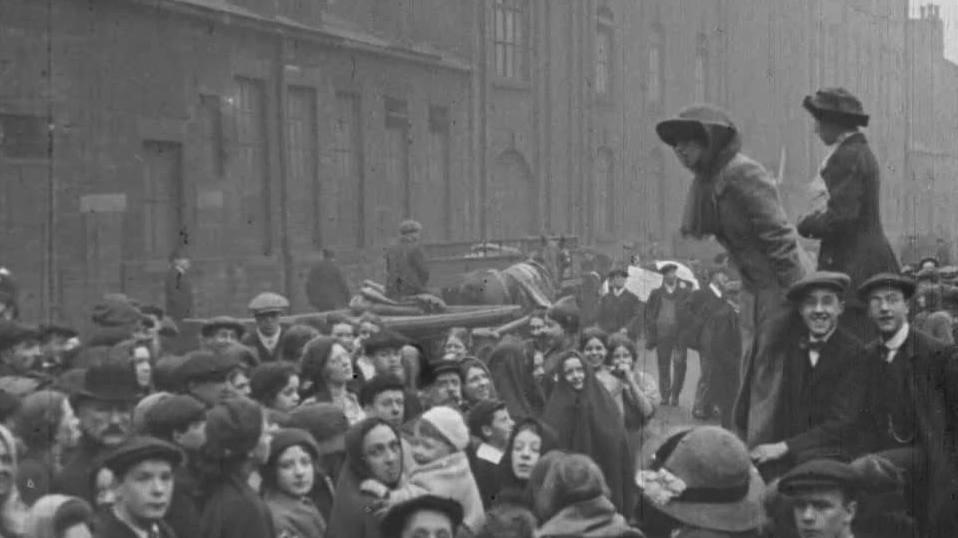
"You have to make more noise than anybody else!," cried Suffragette pioneer Emmeline Pankhurst. But how to make more noise in silent film?
Pankhurst's strategy was simple but clever: at every public meeting or gathering, Suffragettes should stand up and shout "votes for women!". But how to make more noise in silent film? With moving images becoming increasingly important, the suffragettes needed to be not just heard, but seen. Newsreels were noticeably more neutral in their reporting than newspapers, so their cameramen were invited to big demonstrations, where banners and placards were carefully placed for the cameras.
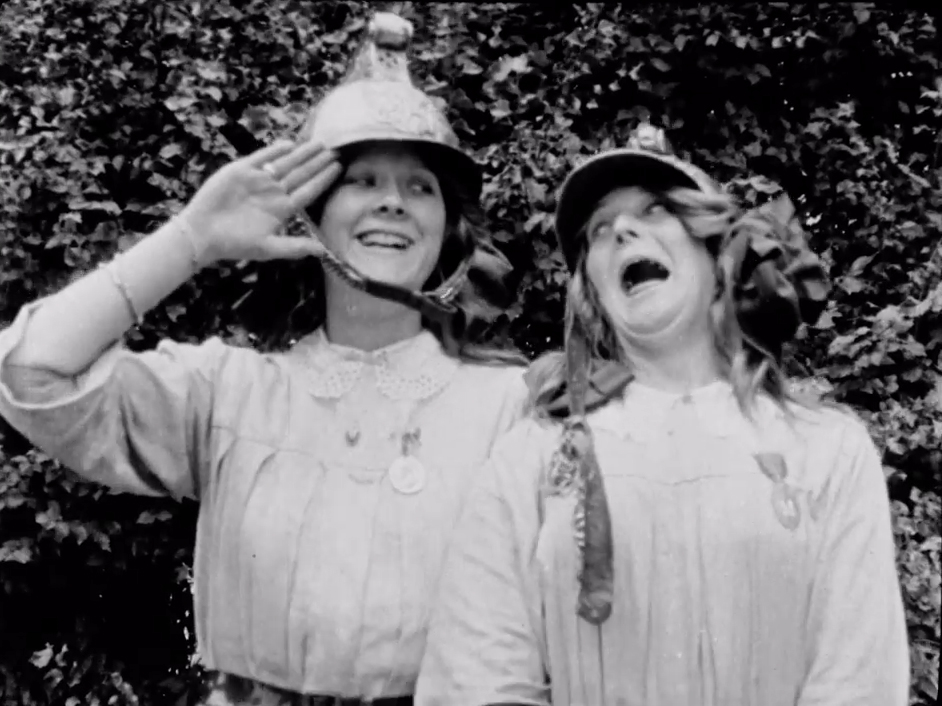
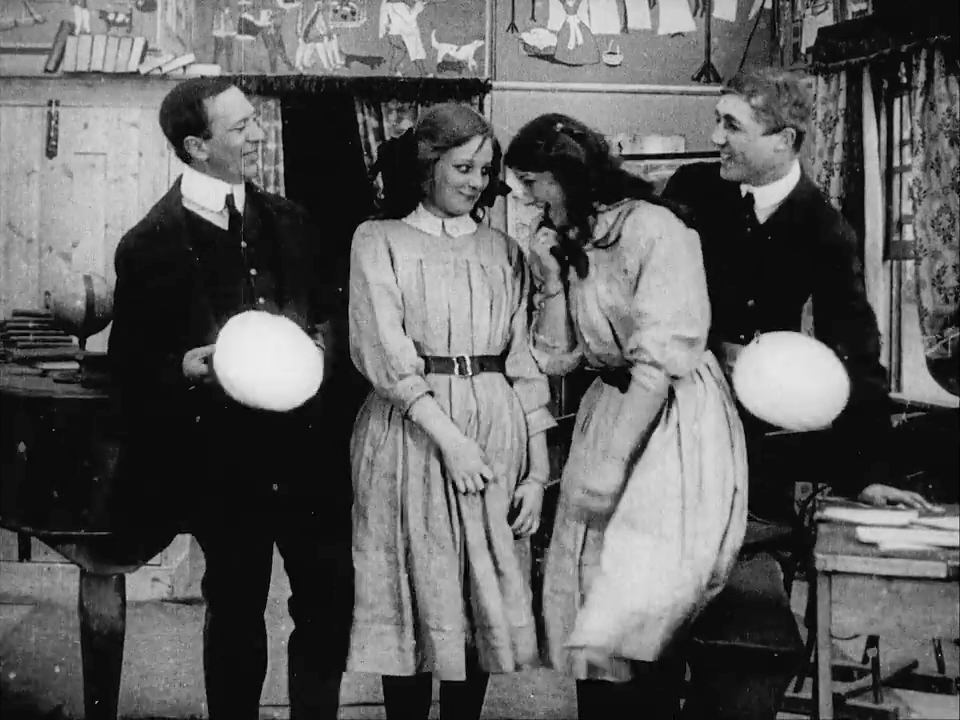
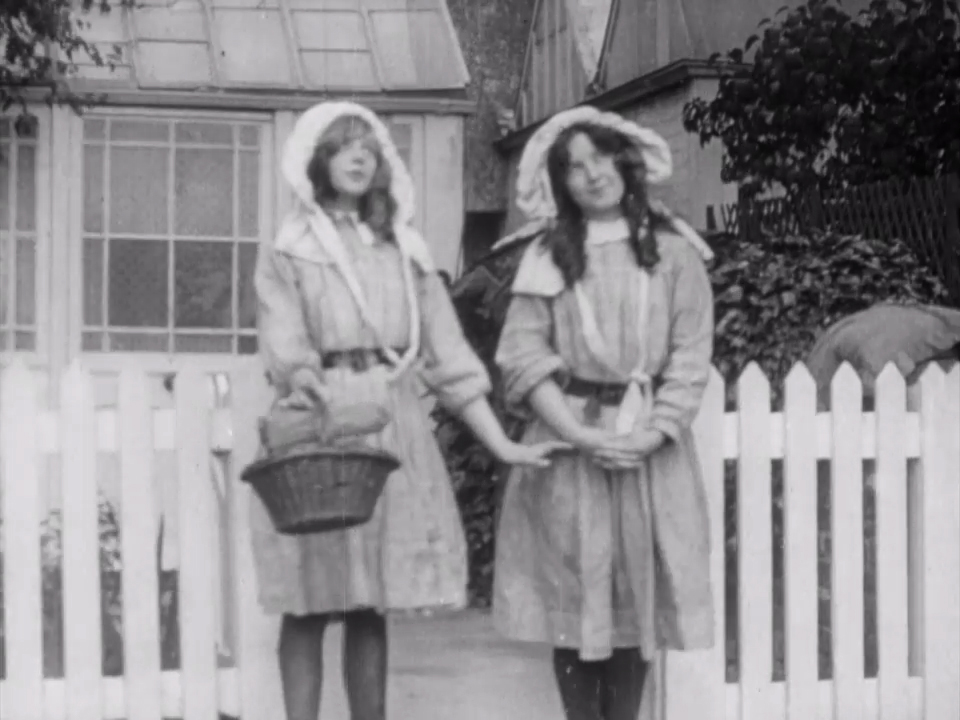
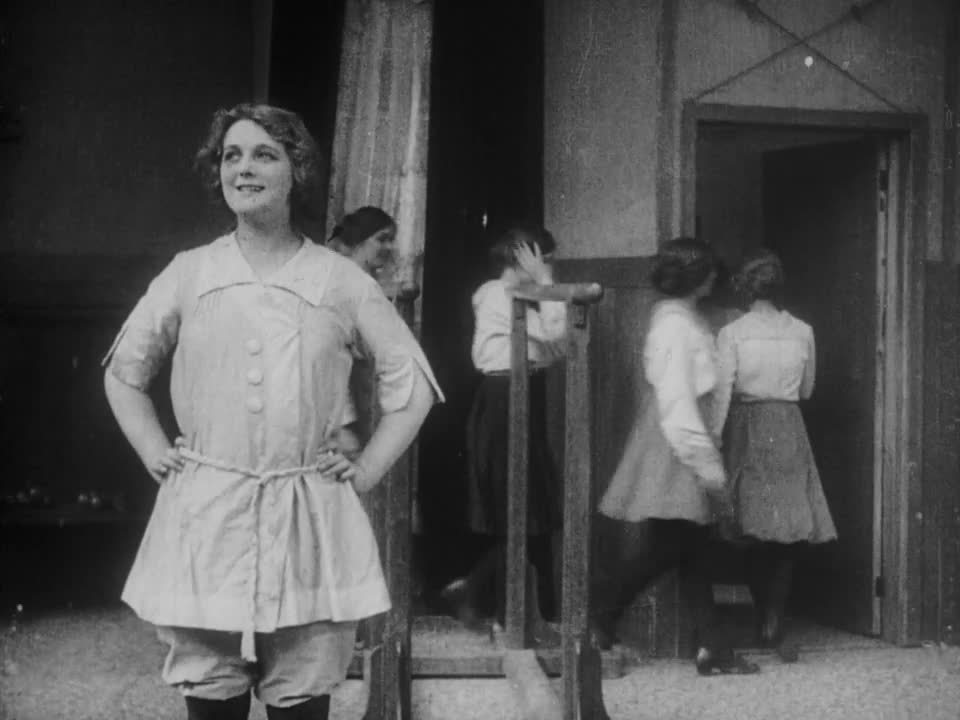
Suffragettes (often played by men in drag) were common objects of ridicule in film comedies. But some characterisations were more ambiguous, and comedy could even - sometimes - give its female protagonists the freedom to make one hell of a noise.