Palace Pandemonium
- Buckingham Palace
- 1914
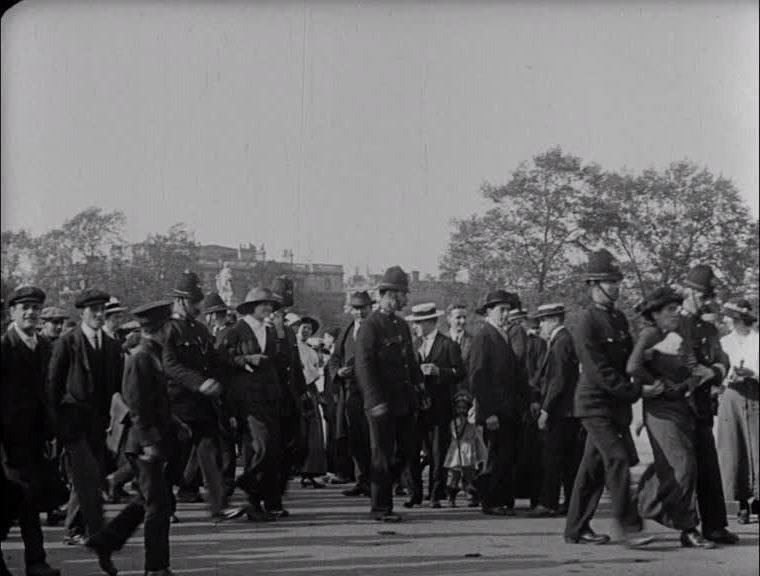
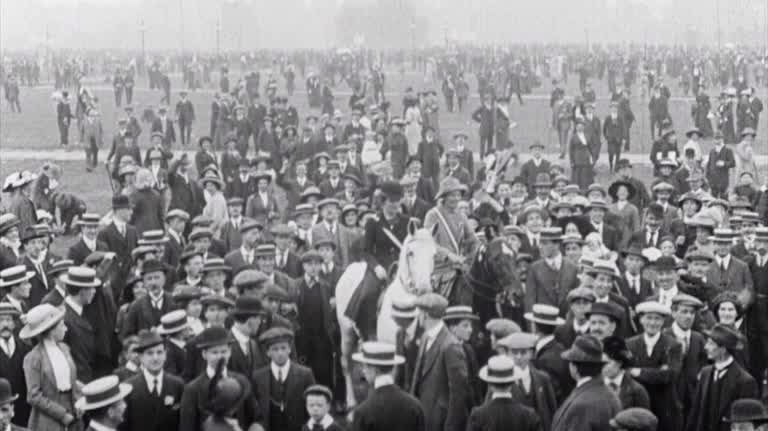
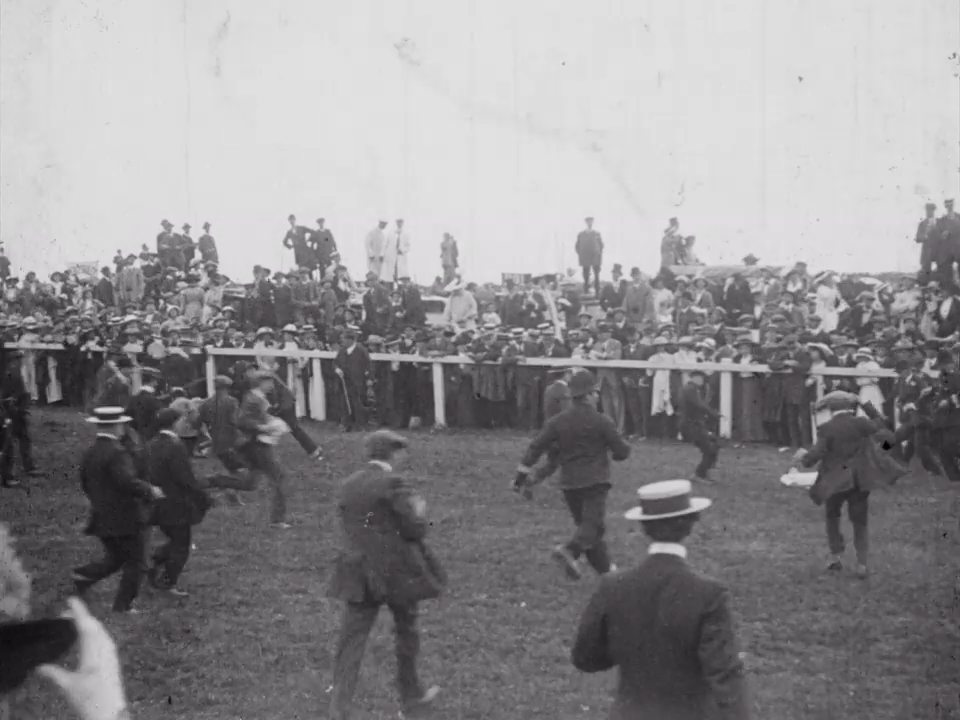
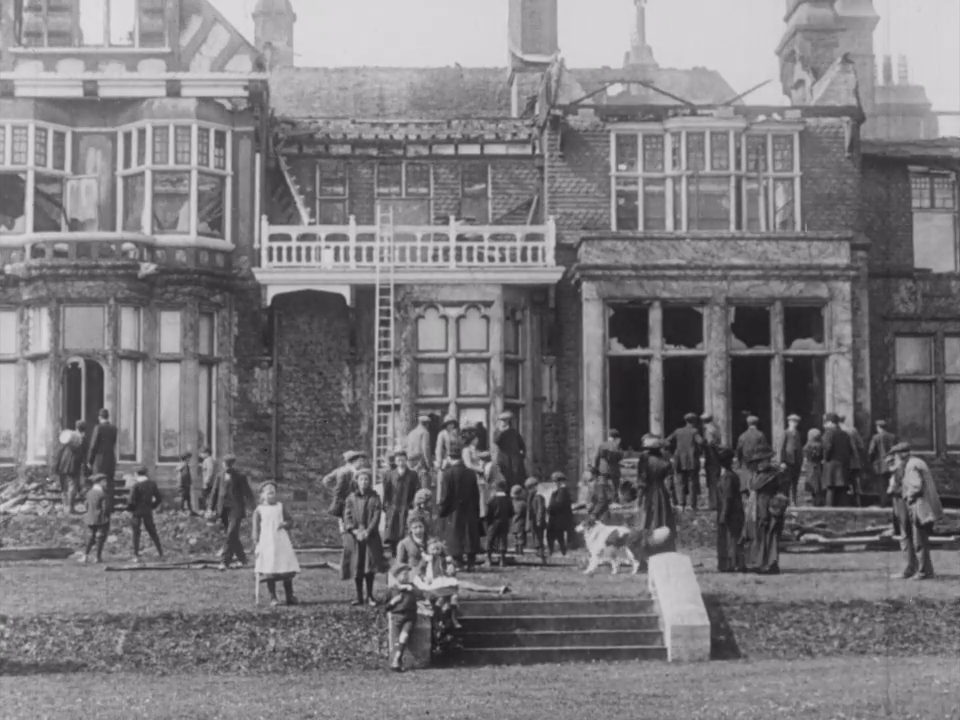
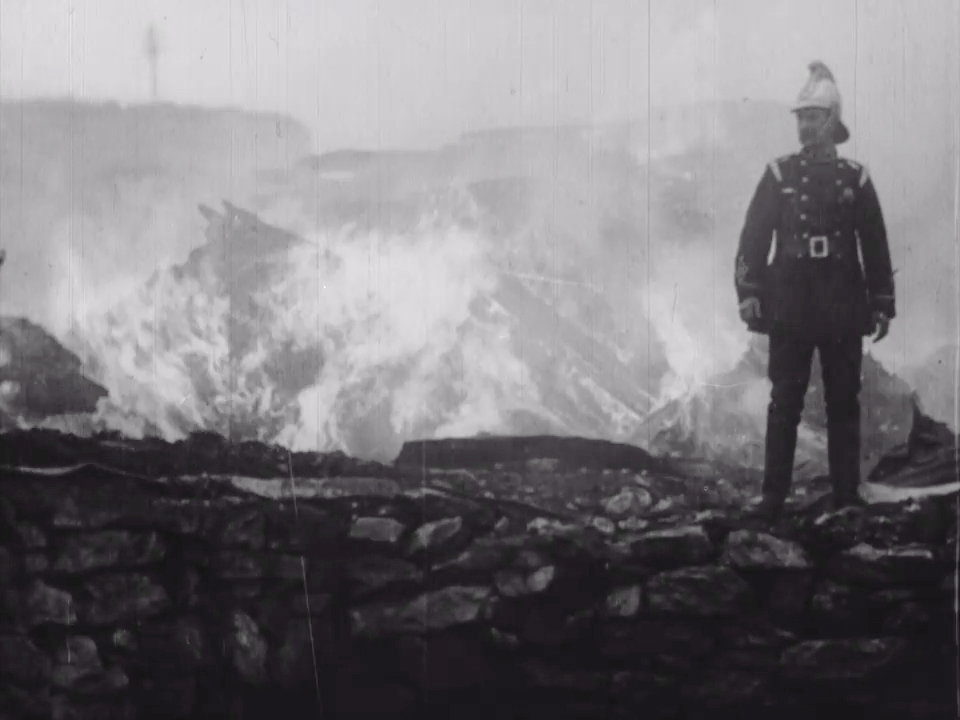
Incendiary images from Plymouth, at the sharp end of the campaign for women's votes.
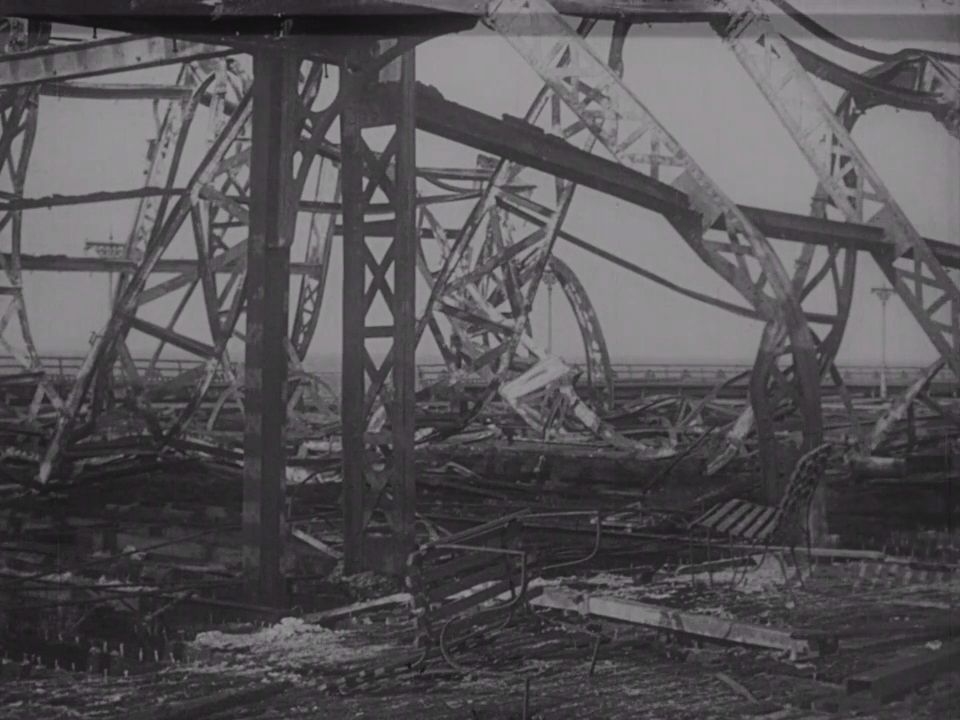
These incendiary images testify to the fiery passions aroused by the movement for women's suffrage. Suffragettes protesting the recent arrest of Mrs Pankhurst had apparently set fire to the timber yard adjoining property belonging to Hancock's fairground in Devonport, Plymouth. Pathe's cameraman made it in time to capture on film the site still ablaze and being hosed down by firemen.
It's in the nature of newsreel to be better at recording effects (the more visually striking the better) than analysing causes. Viewers wouldn't have learnt much about the pros and cons of women's suffrage from Pathe's coverage - other than that it was a truly burning issue.
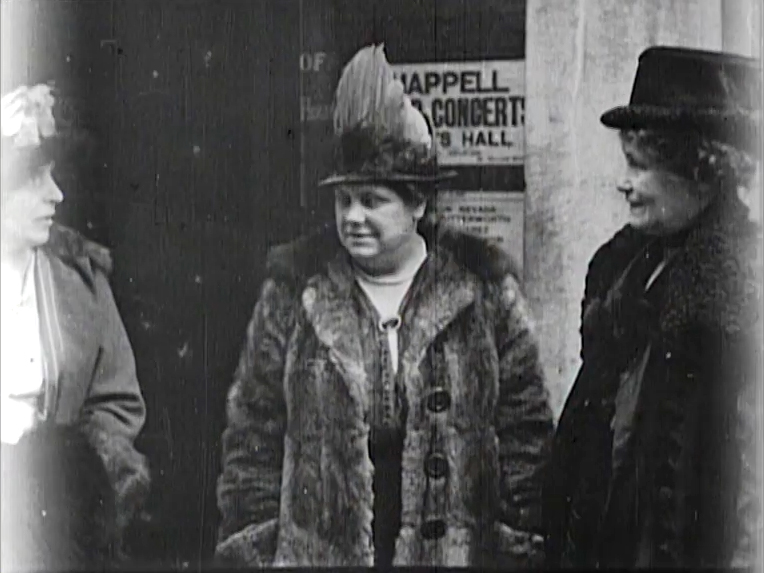
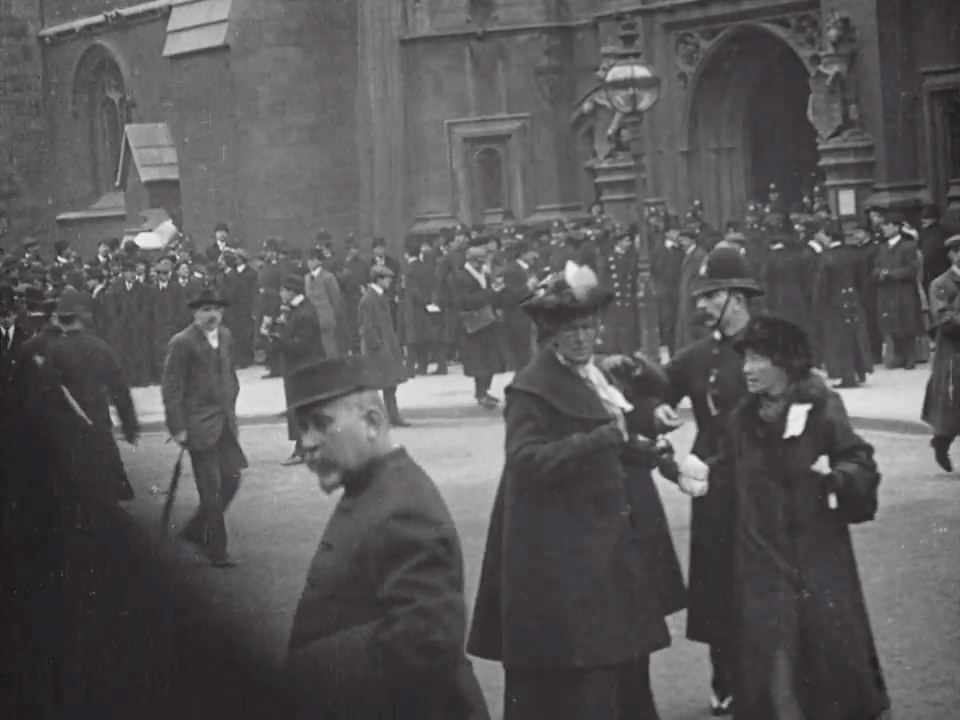
"You have to make more noise than anybody else!," cried Suffragette pioneer Emmeline Pankhurst. But how to make more noise in silent film?
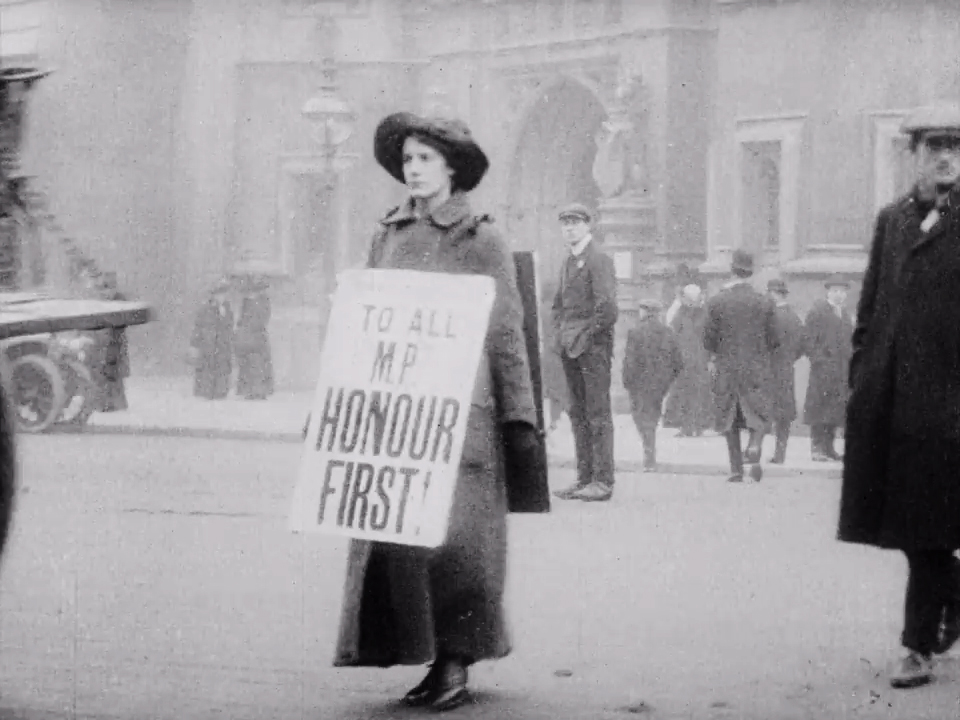
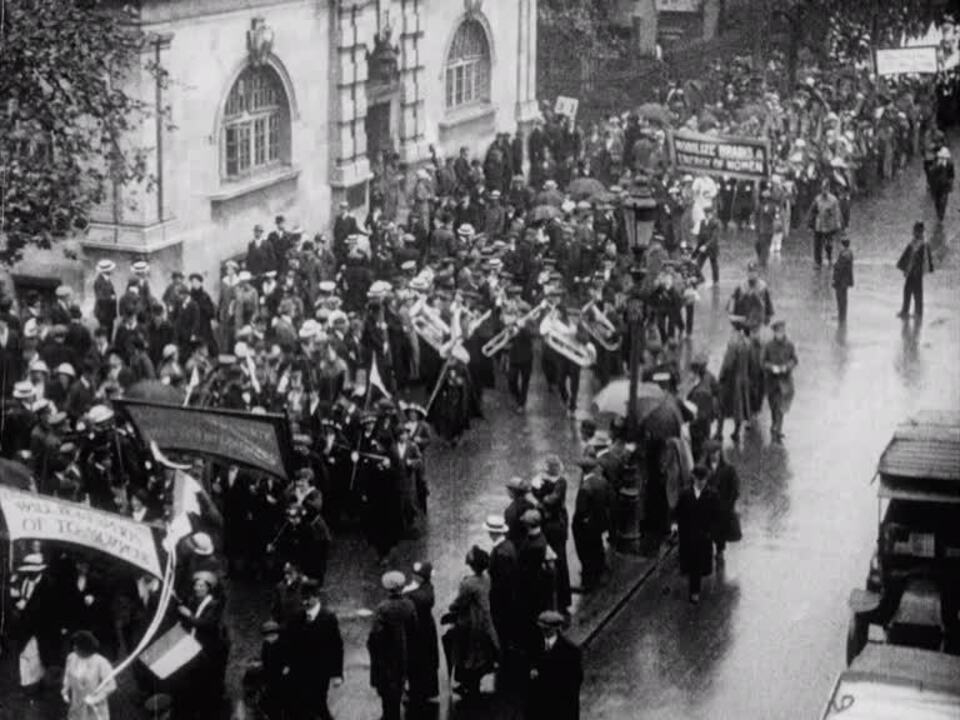
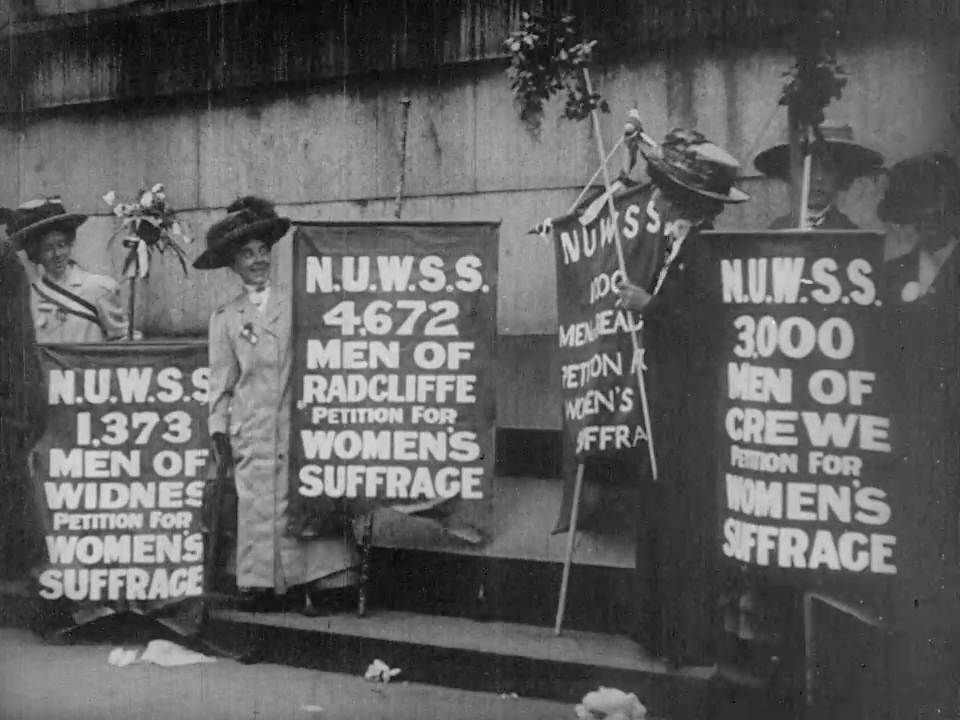
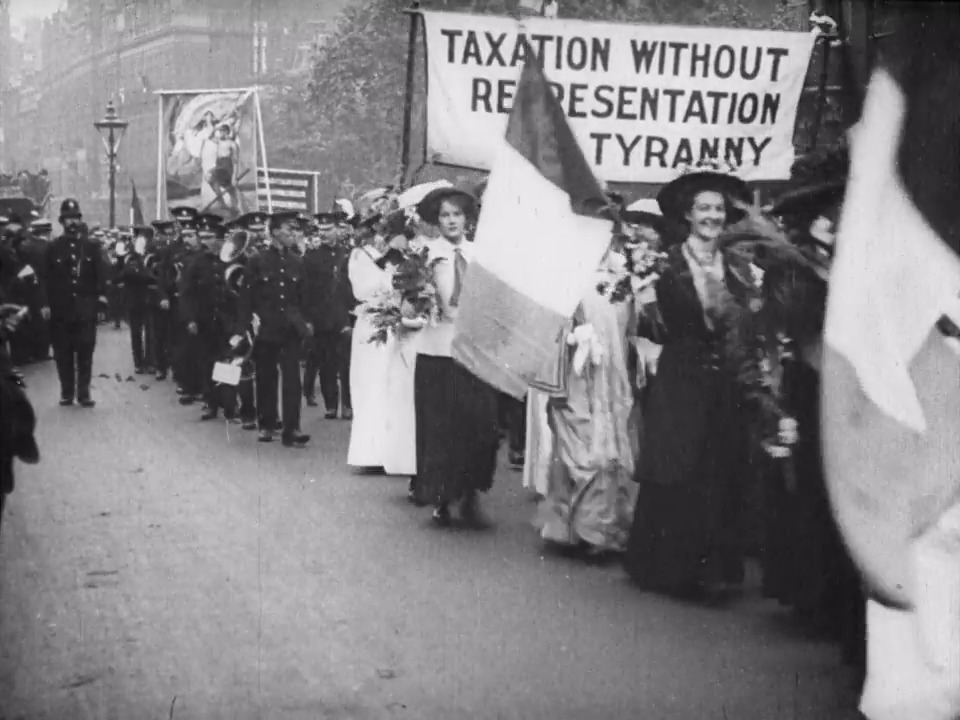
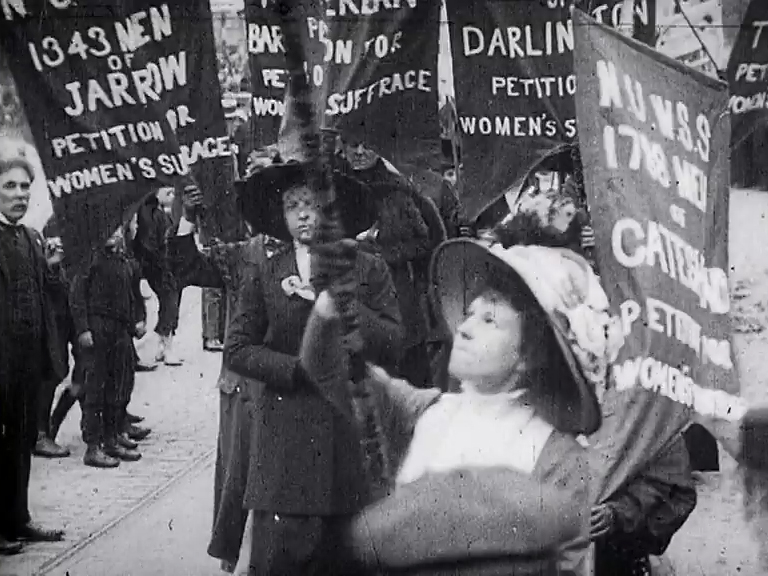
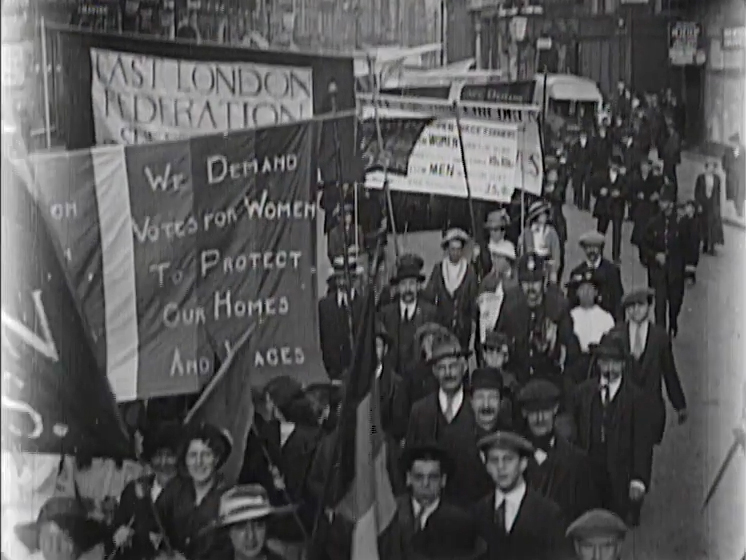
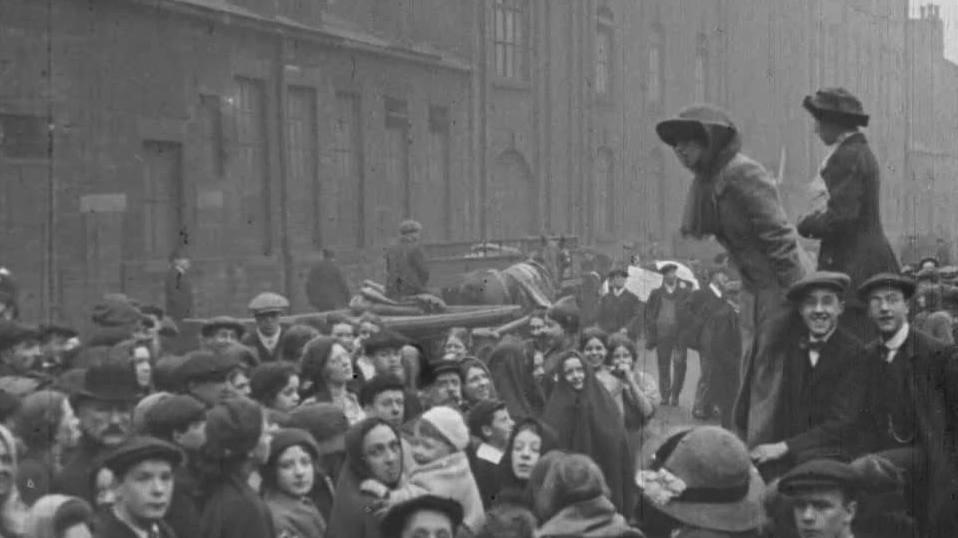
Pankhurst's strategy was simple but clever: at every public meeting or gathering, Suffragettes should stand up and shout "votes for women!". But how to make more noise in silent film? With moving images becoming increasingly important, the suffragettes needed to be not just heard, but seen. Newsreels were noticeably more neutral in their reporting than newspapers, so their cameramen were invited to big demonstrations, where banners and placards were carefully placed for the cameras.
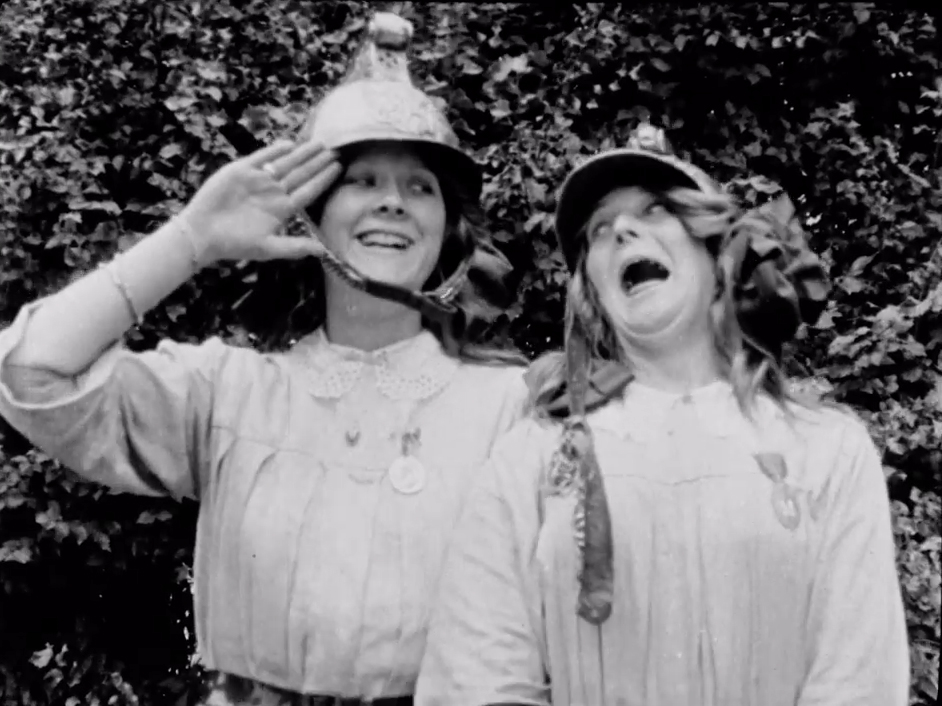
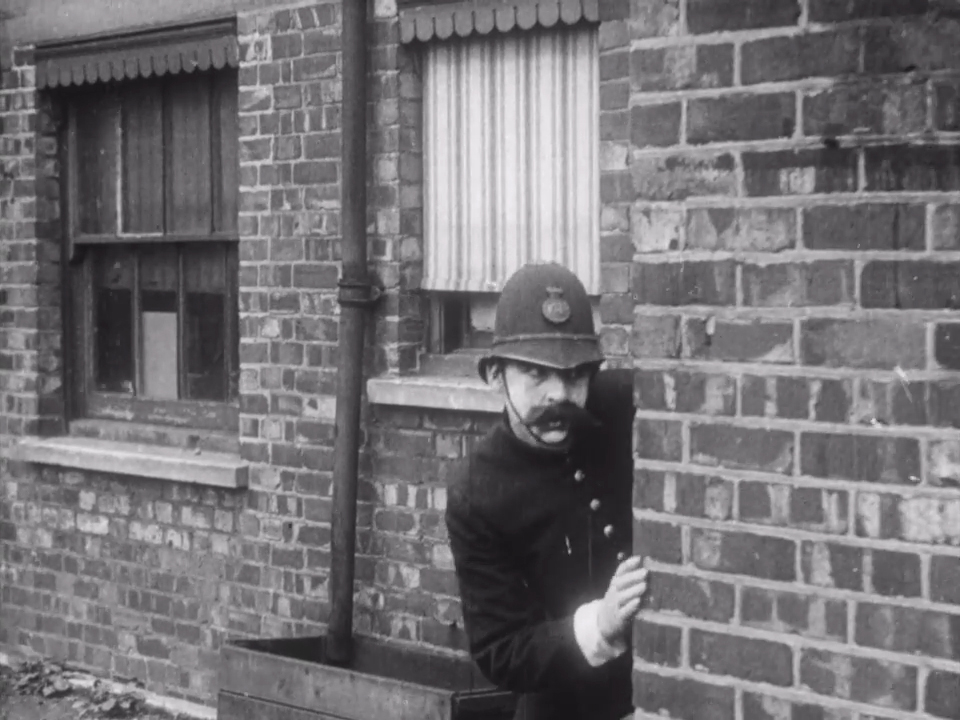
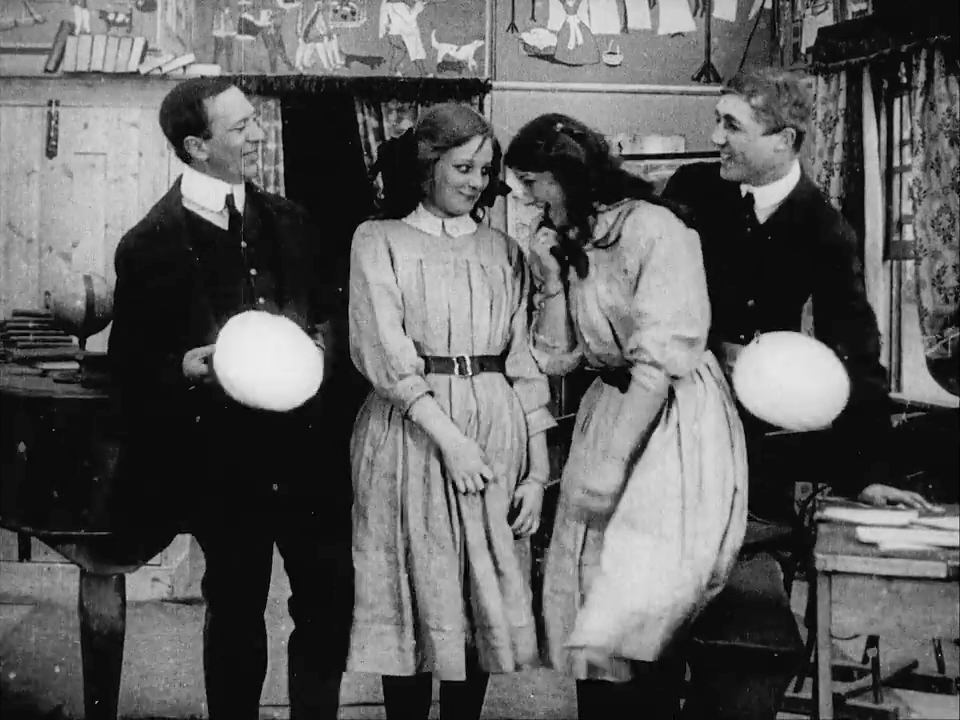
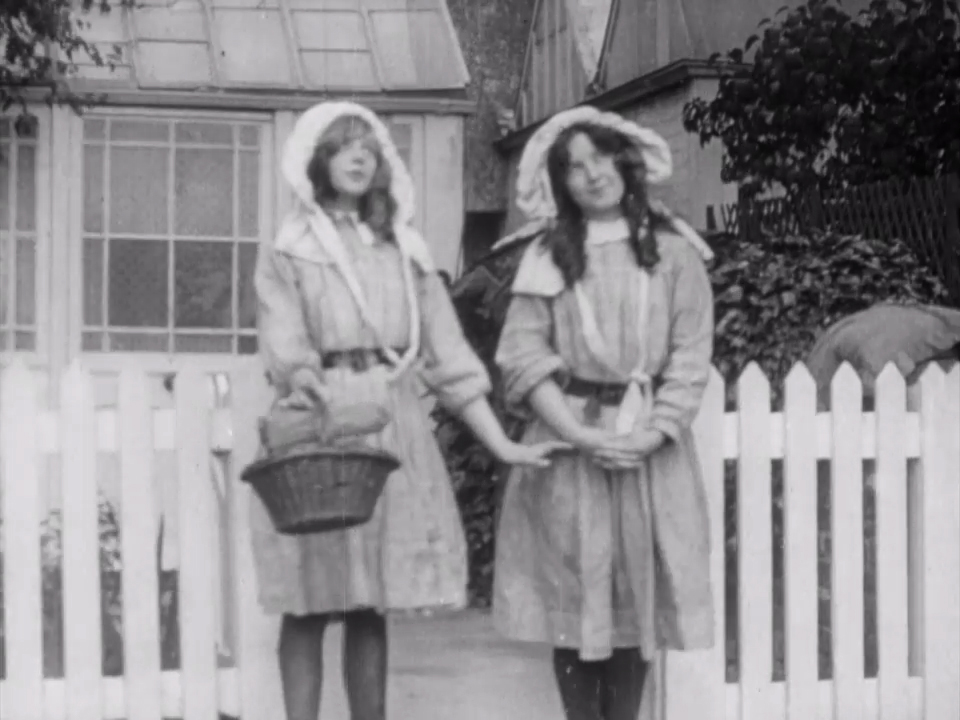
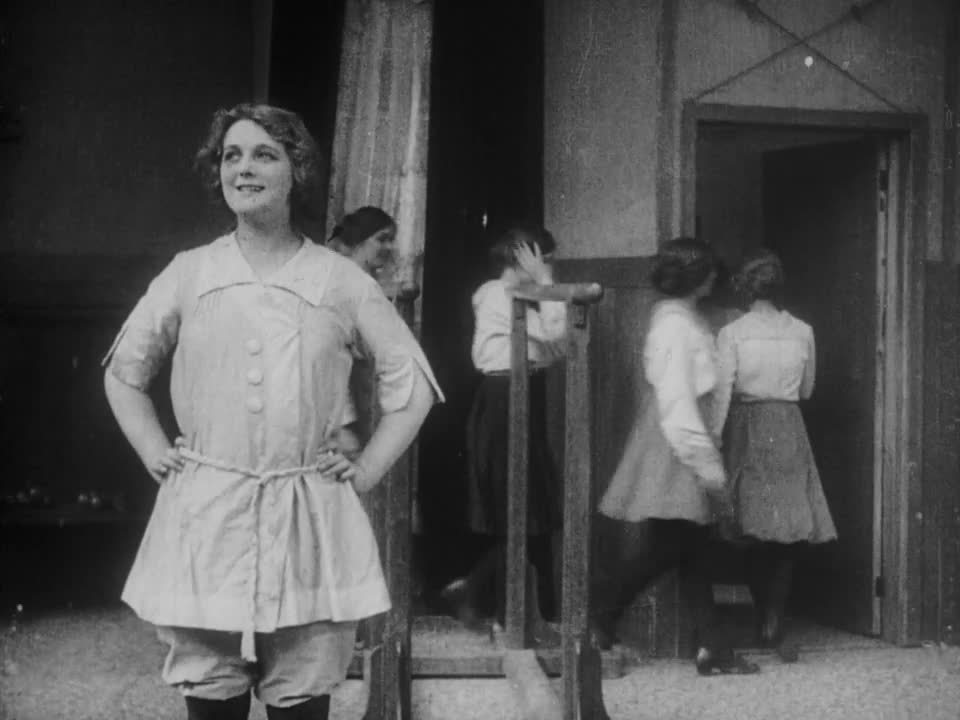
Suffragettes (often played by men in drag) were common objects of ridicule in film comedies. But some characterisations were more ambiguous, and comedy could even - sometimes - give its female protagonists the freedom to make one hell of a noise.