Adult Basic Skills: Entrance
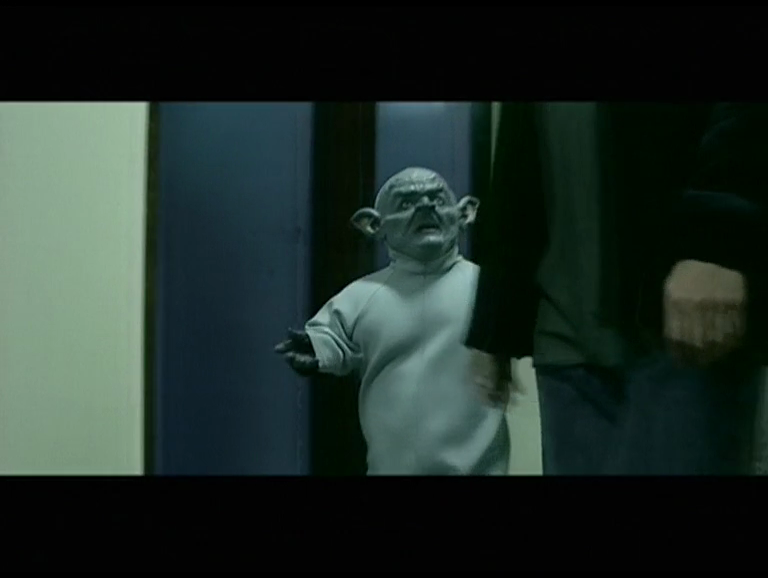
Effective example of the 'Get Rid of Your Gremlins' campaign aimed at improving adult literacy and numeracy.
Faced with lower levels of adult literacy and numeracy in the UK than many neighbouring countries, in 2001 the Department of Education and Skills set a target of improving the situation for 2.25 million adults by 2010. The Central Office of Information was charged with raising public awareness of the help available and encouraging those affected to take action. The 'Get Rid of Your Gremlins' campaign was central to the agency's approach, with a marketing campaign built around several television commercials, posters, press advertisements and even Gremlin paper masks.
Emerging from the RAF in the 1920s, 'gremlins' were originally associated with malfunctioning machinery, and during WWII variations on such characters featured in a variety of propaganda posters to promote safety and vigilance. Here they play the part of inner demons, representing the fears and doubts that nag away and prevent us facing up to change. The campaign generated over 300,000 helpline calls by 2005, gaining widespread recognition, but it was ultimately felt that it fell short on its impetus to action, particularly with older audiences - while some parents complained that the gremlins themselves were frightening to young children.
How We Learned
From classroom to lecture hall to living room: a look at the many ways TV and video shaped our learning experiences over the years.
For most of us, the screen has been as much a part of our education as the blackboard or whiteboard. Early 20th century educators quickly saw that moving images could be a valuable teaching aid, and by the 1920s and 30s a thriving industry was delivering thousands of films for classroom use. By the 1960s, the small screen had largely taken over, and schoolkids would thrill at the sight of the teacher wheeling out a television set.
In the meantime, education was transforming, too, with grammar schools, secondary moderns and technical schools giving way to comprehensives, which in turn made room for academies and faith schools. Higher education swelled with new universities and polytechnics, while the Open University, launched in 1969, used video and television to reach students in their homes. Through television, informal learning has also helped those who missed out on traditional schooling, or who just want to expand their minds. Whether we spoke our first words along with onscreen puppets, studied along with Open University broadcasts or followed educational debates in current affairs programmes, television and video have always had a lot to teach us.
22 videos in this collection
Watch in libraries only
Watch in libraries only
Make It Count [22/01/78]
Watch in libraries only
Elton Well Dressing
Watch in libraries only
Bill Has Trouble with the Magic Box
Watch in libraries only
Don't Ask Me [10/08/77]
Watch in libraries only
School
Watch in libraries only
School Leaver
Watch in libraries only
Chalkface [04/07/82]
Adult Basic Skills: Entrance
Watch in libraries only
Think Tank [18/08/81]
Watch in libraries only
A New Choice of School
Watch in libraries only
Children Talking 1 Assessing Spoken Language at Eleven
Watch in libraries only
Teaching Science: Object Lessons
Watch in libraries only
Able Children
Watch in libraries only
Brighton Polytechnic Promo 2
Watch in libraries only
Painting by Numbers
Watch in libraries only
Multi-cultural Education
Watch in libraries only
One Week in July
Watch in libraries only
Introduction to Computers
Watch in libraries only
Christmas Special
Dulwich College and Village