The Audit of War
Watch in libraries only
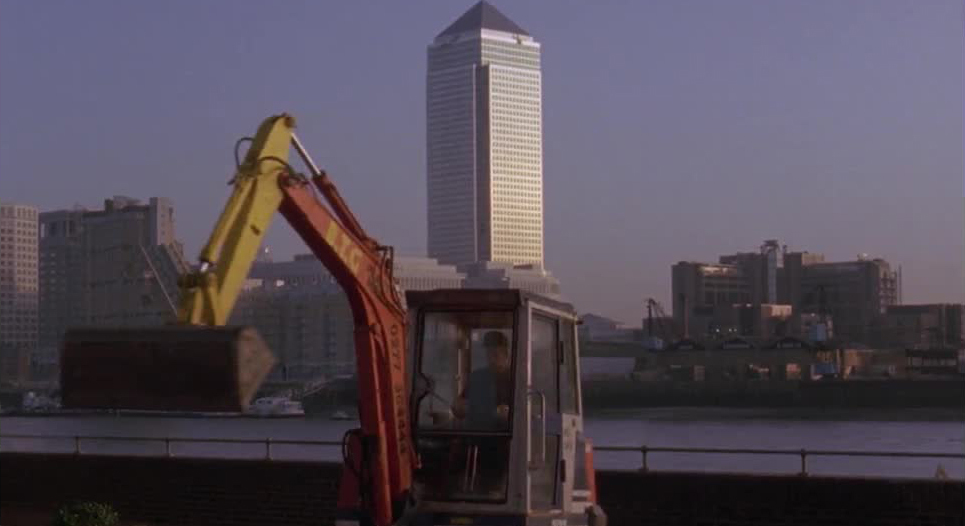
The literal and metaphorical shadow of Canary Wharf spills over all that surrounds it.
Seen from multiple vantage points, Canary Wharf here dominates the post-industrial landscape of London's beleaguered East End. Artist William Raban cuts quickly between different shots and a snappy, musical rhythm is introduced to this unusual, multi-layered portrait of the shining commercial business centre and towering architectural structure.
Artist filmmaker William Raban began by making expanded cinema pieces and landscape-based works, frequently focusing on the formal properties of 16mm film. Since the mid-80s he has explored the economic and social topography of the capital city, often gleaning images and pre-existing texts according to a specific conceptual constraint. Thames Film, originally broadcast on television in the slot The Lie of the Land in 1987, centres on the physical and historical experience of the river as seen from the vantage point of a low level boat. It also includes archival prints and found footage, further unpacking the different histories that emanate from the river while also highlighting the changes that had been introduced to the city docks by Margaret Thatcher's government. Sundial, Thames Film and other works from the late 1980s and into the 1990s paint a collective, changing portrait of the UK's capital and commercial centre.
Revisit the end of the 20th Century, as we knew it...
The 1990s had a lot to live up to. At the tail end of the 1980s, the dissolution of the Soviet Union, thawing of Cold War tensions, and symbolic fall of the Berlin Wall gave the following decade the charge of a new era – or at least the end of an old one. Political scientist Francis Fukuyama went one further, declaring what he saw to be the definitive victory of liberal democracy to be 'the end of history' itself.
Rather than closing the book on history, though, the 1990s passed the baton between the centuries, seeding themes still relevant today across politics, technology, culture and society at large, from the blanket, up-to-the-minute coverage of the Gulf War, to a growing concern for the environment, to revolutions in science that transformed the food we eat.
In Westminster, almost two decades of Conservative rule gave way to the charismatic optimism of New Labour, which was buoyed by the pop cultural moment of “Cool Britannia” on screen, in galleries, and on the airwaves. Yet, even during this period of puffed-up national pride, the union itself was a topic of debate, with devolution processes underway in Scotland, Wales and Northern Ireland – where the historic Good Friday agreement to put an end to the Troubles was signed.
Elsewhere, the perfect marriage of consumerism and technology continued, as our lives became increasingly digital and connected. The boxy desktop PCs, snail’s-pace dial-up modems and Y2K ‘Millennium bug’ hysteria may now seem quaint, but they pointed towards our current, always-online era. History, as ever, marched on.
Watch in libraries only
Watch in libraries only
Watch in libraries only
Watch in libraries only
Watch in libraries only
Watch in libraries only
Watch in libraries only
Watch in libraries only
Watch in libraries only
Watch in libraries only
Watch in libraries only
Watch in libraries only
Watch in libraries only
Watch in libraries only
Watch in libraries only
Watch in libraries only
Watch in libraries only
Watch in libraries only
Watch in libraries only
Watch in libraries only
Watch in libraries only
Watch in libraries only
Watch in libraries only
Watch in libraries only
Watch in libraries only
Watch in libraries only
Watch in libraries only
Watch in libraries only
Watch in libraries only
Watch in libraries only
Watch in libraries only
Watch in libraries only
Watch in libraries only
Watch in libraries only
Watch in libraries only
Watch in libraries only
Watch in libraries only
Watch in libraries only
Watch in libraries only
Watch in libraries only
Watch in libraries only
Watch in libraries only