Toying with the Future
Tracing the history of toys and speaking with young computer games designers (and users), this documentary explores whether technology can help educate as well as entertain.
Broadcast in December 1992, this edition of the Channel 4's long-running science series Equinox offers an even-handed, inquisitive, wide-ranging analysis of the rise of video games and electronic toys.
In the early 1990s, video games were at the centre of a moral panic about their potential adverse affects on young children. Two key contributors offer opposing views on the matter: Eugene Provenzo of the University of Miami expresses concerns about how increased screen time might affect children's growth and harm their social development, while Brian Sutton Smith, a radical 'play theorist', brings a more optimistic view that this new frontier of play could revolutionise how future generations think and act.
Stepping away from the alarmist headlines, this documentary situates these electronic innovations within the history of children's toys and the way that they enchant, enthral and educate young minds. A neuropsychological angle is explored, advancing a theory that increased interactivity could help children make better sense of the world, as well as develop their hand-eye coordination and bolster their imaginations - all within a balanced diet of play, of course. Many of the young gamers interviewed about their obsessions are also revealed to have active hobbies away from the television screen, from playing baseball to learning piano.
One aspect of the history of toys that this documentary explores is the tradition of gendered play (eg. soldiers for boys, and dolls for girls). Even though the public perception of video games at the time, no doubt reinforced by targeted marketing campaigns, was that it was primarily a boys' medium, this documentary features young girls who play just as passionately as their brothers, and even interviews the pioneering female game designer Dawn Drake of Manchester's Ocean Software.
It's this interest in video games as both technology and artform that makes this documentary feel ahead of its time. While much of its focus is on how the end product affects those who play, we also see how games are made, from drafting the design to composing the score. A creative industry on the rise.
Pushing Buttons: Video Games on TV
How gaming turned from futuristic novelty to cultural juggernaut.
This collection captures an important step in the story of video games as an industry, art form and cultural force. While arcade machines had become a purse-draining leisure activity across the UK, the advent of the video game console in the mid-1980s mostly bypassed British households thanks to the popularity of 8-bit home computers such as the BBC Micro, ZX Spectrum, and Commodore 64, which offered educational, programming and technical experiences as well as simple entertainment. That all changed in the 1990s, though, when the Japanese video game companies Nintendo and Sega cracked the UK and quickly dominated the market, making their mascots Mario and Sonic into pop-culture superstars. Their Game Boy, Super Nintendo and Mega Drive consoles prioritised pure pleasure, and legions of young fans followed their sirens’ call.
The representation of video games on the small screen charted this shift. Where crude pixellated graphics and bleep-bloop electronic sound effects had once been used as a language for communicating with young audiences in educational programmes, and computer games at large had been viewed as a novelty, nerdy or niche concern, gaming became a serious topic for television in the form of magazine and challenge shows such as Bad Influence and GamesMaster (the latter inspired by creator Jane Hewland’s own son’s obsession with Nintendo’s Duck Hunt).
Elsewhere, current affairs series sought to make sense of this new influence on the nation’s children, alternately feeding and commenting on a growing moral panic around the adverse effects of welcoming video games into our lives – concerns that, even thirty years on, still define our relationship with this thrilling, enthralling art form. Press start and play on. Let the games begin!
14 videos in this collection
Watch in libraries only
Watch in libraries only
Bad Influence! [07/01/93]
Watch in libraries only
Welcome to the Danger Zone
Watch in libraries only
Toying with the Future
Watch in libraries only
Railway Video Games
Watch in libraries only
Computer Game About Denis Thatcher
Watch in libraries only
Dangerous Journey
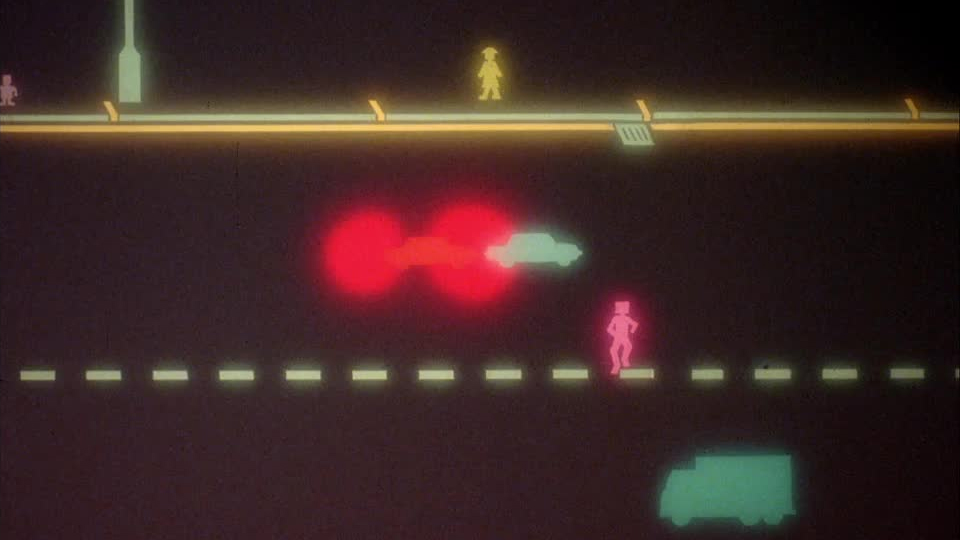
Space Invader
Watch in libraries only
Appeal For Computer Game Programmers
Watch in libraries only
Computer Holiday
Watch in libraries only
Computer Studies
Watch in libraries only
Gamesmaster [31/12/92]
Watch in libraries only
Bad Influence! [12/11/92]
Watch in libraries only