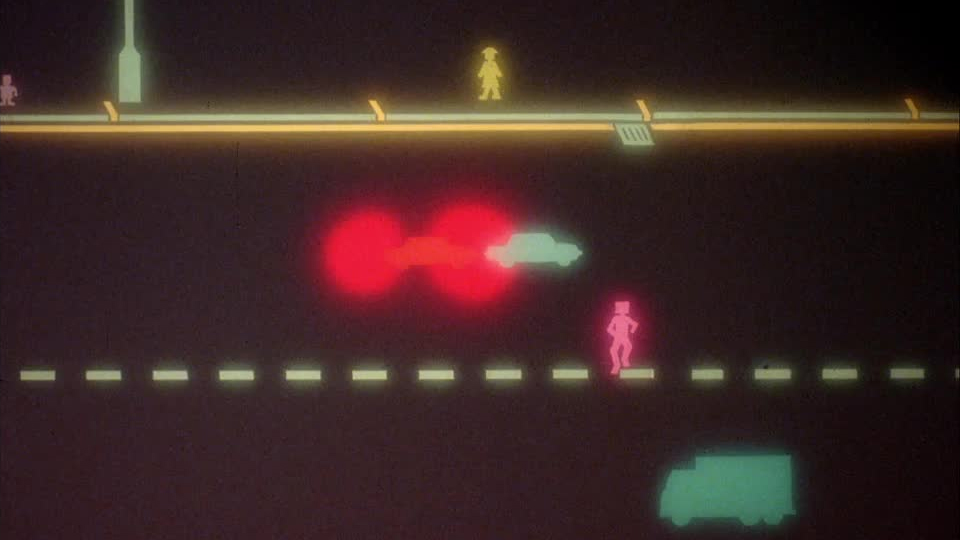
How gaming turned from futuristic novelty to cultural juggernaut.
This collection captures an important step in the story of video games as an industry, art form and cultural force. While arcade machines had become a purse-draining leisure activity across the UK, the advent of the video game console in the mid-1980s mostly bypassed British households thanks to the popularity of 8-bit home computers such as the BBC Micro, ZX Spectrum, and Commodore 64, which offered educational, programming and technical experiences as well as simple entertainment. That all changed in the 1990s, though, when the Japanese video game companies Nintendo and Sega cracked the UK and quickly dominated the market, making their mascots Mario and Sonic into pop-culture superstars. Their Game Boy, Super Nintendo and Mega Drive consoles prioritised pure pleasure, and legions of young fans followed their sirens’ call.
The representation of video games on the small screen charted this shift. Where crude pixellated graphics and bleep-bloop electronic sound effects had once been used as a language for communicating with young audiences in educational programmes, and computer games at large had been viewed as a novelty, nerdy or niche concern, gaming became a serious topic for television in the form of magazine and challenge shows such as Bad Influence and GamesMaster (the latter inspired by creator Jane Hewland’s own son’s obsession with Nintendo’s Duck Hunt).
Elsewhere, current affairs series sought to make sense of this new influence on the nation’s children, alternately feeding and commenting on a growing moral panic around the adverse effects of welcoming video games into our lives – concerns that, even thirty years on, still define our relationship with this thrilling, enthralling art form. Press start and play on. Let the games begin!