Before Stonewall: Peggy's Interview Clip 1 of 1

From the collection of

Screen Archive South East at the University of Brighton
Screen Archive South East at the University of Brighton collects, preserves, catalogues and provides public access to its collection of films and magic lantern slides. The collection charts the rise of screen culture in the region and the nation and captures many aspects of life, work and creativity in the South East from the late 19th century to the present day. It is available for research, screenings, creative re-use and commercial access.

Before Stonewall: Peggy's Interview Clip 1 of 1

This video can only be viewed in libraries

Find your nearest library

Peggy's ribald and fast-paced recollections of Bristol's gay-scene in the 50s and 60s show a community having a gay old time - despite the law.

Bristol based Peggy's entertaining interview features everything from her own violently romantic crushes to fights in the city's lesbian pubs and clubs.

Never one for long-lasting relationships, Peggy recalls how she always seemed to have short-term crushes on women rather than steady girlfriends, whom she claimed were too possessive. Of particular interest to Peggy were bus-drivers, nurses and policewomen though her friends tended to be mostly gay boys.

Peggy also recalls that girls in the past were much more promiscuous, calling them 'hunters' and their relationships seemed to be far less stable than those of gay men. A group of 'hunters' from Wales came to her pub one evening and Peggy recalls how they were called 'Munchkins' by all the regulars, on account of their short stature.

She says many lesbians adopted a hyper-masculine way of behaviour and recalls the many vicious fights, usually over girl friends, that she witnessed when working in pubs in Bristol. This exaggerated masculinity even went as far as one lesbian having her breasts removed to give her a more mannish appearance, an act that Peggy considers to be a form of self-mutilation.

She feels the same way about men who wish to become women saying that people should be happy in the bodies they've been given. She then recalls Bristol's gay and lesbian pub and club scene in the 1950s and 1960s, remembering the antagonism that existed between gay men and lesbians which led to discrimination and strict rules determining to which venue one could be admitted. The bad reputation that lesbians had for fighting probably didn't help.

Peggy was born in 1923 to middle-class parents in Bristol. While a youngster, she was raped by a soldier and became pregnant.

Sent to a Catholic home for single mothers, Peggy was separated from her baby daughter until her parents agreed to adopt her.

Amazingly, when Peggy was 15, she went to her first gay pub called the Radner. Though straight at that time, she felt an affinity with gay people - feeling more comfortable with gay men than straight people.

Always drawn to more masculine women, Peggy formally 'came out' around 1960, eventually working at the same Radner pub she'd first visited in 1938.

Peggy was also married for a time to a man who liked to wear her clothes - and looked better that she did wearing them. She soon left this marriage and embarked on a career in pubs and clubs around Bristol, always attending parties and looking after her 'gay boys'.

Tags

From the collection

Queer Lives

Shining a spotlight on the individuals at the helm of revolutionary marches, movements and cultural moments across the UK.

The 1980s and decades that followed saw a radical shift in queer and trans visibility nationwide; from the debut of gay and lesbian tv programming, with the first national TV series for and about queer individuals premiering on Channel 4 in 1982 (One in Five), to a rise in community mobilisation and activism. In response to the need for collective care and room for self expression, we also see notable contributions to the arts, as well as the facilitation of safe spaces for queer youth - some of which still exist today!

A selection of these milestones have been highlighted in this collection, alongside oral histories, works that counter misinformation and challenge stereotypes, and films that represent the simple joys of the 'everyday'. It is important to see how attitudes and support for the community has changed over the decades, although somewhat unnerving to see how much has remained the same. A reminder of the urgent need for solidarity, support within communities and advocacy against homophobia / transphobia.


24 videos in this collection

1

Personal Best / Talking Hairs / Running Gay

2

Lesbian Health Matters - A Teaching Pack

3

A Short Film about Us

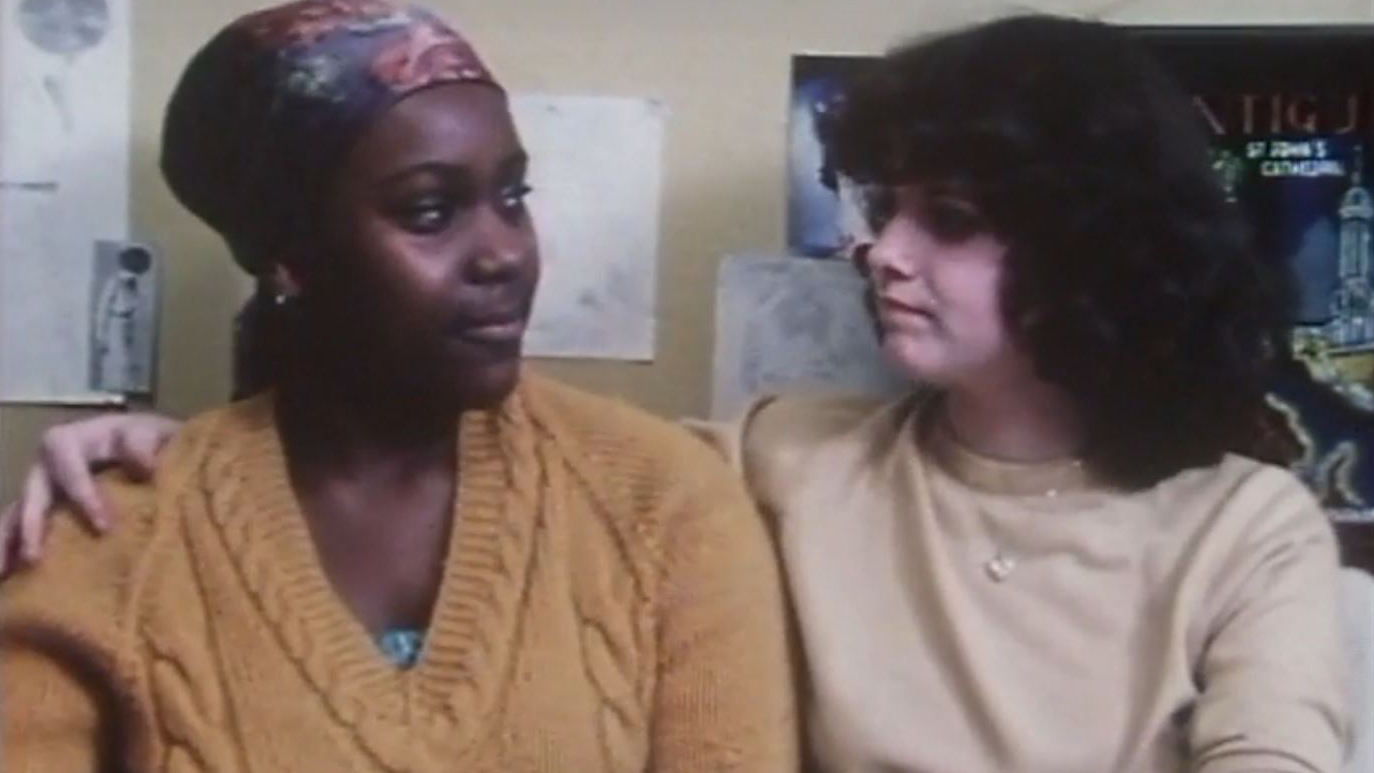
Hackney teenagers - black, white, gay and straight - talk sex, love and marriage in this compelling drama-documentary.
4

True Romance, Etc.

5

Fighting to Save Gay and Lesbian Prayer Book

6

Out on Tuesday [03/04/90]

7

A Day in the Life of a Drag Queen

8

Out on Tuesday [28/03/89]

9

Out on Tuesday [07/03/89]

10

Section 28 Manchester

11

Video 28

12

Gay Heritage Trail

13

Before Stonewall: Patricia's Interview Clip 1 of 1

14

Before Stonewall: Chris's Interview Clip 1 of 1

15

Before Stonewall: Charlie's Interview Clip 1 of 1

16

Before Stonewall: Peggy's Interview Clip 1 of 1

17

Norrie

18

Vogue Workshops Final Preparations

19

An Invitation to the Liverpool Grand Vogue Ball

Manchester is 'Tickled Pink' with this annual celebration of LGBT life.
20

Manchester Tickled Pink

21

Homotopia Launch Party

22

Homosexuality

23

Pedagogue

24

PA Macglochlainn Campaigns for Gay Rights

View full collection