Before Stonewall: Michael's Interview Clip 3 of 3

From the collection of

Screen Archive South East at the University of Brighton
Screen Archive South East at the University of Brighton collects, preserves, catalogues and provides public access to its collection of films and magic lantern slides. The collection charts the rise of screen culture in the region and the nation and captures many aspects of life, work and creativity in the South East from the late 19th century to the present day. It is available for research, screenings, creative re-use and commercial access.

Before Stonewall: Michael's Interview Clip 3 of 3

This video can only be viewed in libraries

Find your nearest library

Michael reflects on how HIV has affected his relationship and the changes that being diagnosed positive have brought to his life in general.

Michael reflects on his HIV status and the way being 'positive' has affected his life. His diagnosis came when he was just starting a new relationship, and both he and his partner decided to work through the consequences together.

Michael now views being HIV positive in positive ways, despite bouts of ill health and the occasional hospital stay. Referring to a condition he has, called 'spastic guts', Michael is unsure whether or not that is HIV-related or simply due to his advancing age.

Today, Michael leads a very 'sensible' life and behaves like a retiree. Recalling that he 'grieved' when he got his diagnosis, Michael adds that he also 'grieved' for the things he'd have to give up, like competitive contact sports. He also comments on the friends who had to be 'sacrificed' because they couldn't handle the new situation, particularly those who originally had problems coping with his gayness and then with his HIV status. However, Michael records that there were friends who coped with both, and who remain his friends.

Gay friends were 'cut off', which Michael doesn't consider a great loss, since friendships and relationships on the gay scene tended to be short-lived and fickle by nature. Also believing that he was no longer 'young and beautiful', he felt out of place in a gay scene which was centred on young people. Feeling a bit like 'mutton dressed as lamb' at gay venues, Michael says he was once told to 'get out of the way! Grandad'. Nowadays, Michael has retreated from the 'gay scene' and doesn't miss it one bit.

Michael was born in Horley, Surrey, in 1949, before moving with his family to rural Somerset. His father, an Old Etonian, was a farmer and his mother was a teacher. Despite attending a public school, Michael also trained to be a teacher.

Until he was in his thirties, Michael was deeply conflicted about his homosexuality. He had many dalliances with boys of his own age and later with girls. He got to know a snail expert who was conducting research on Exmoor. Though married, the man made a pass at Michael, who was shocked by the experience.

Another friendship was with a fellow biker, who ridiculed the absence of women in Michael's life. In revenge, Michael found a girlfriend, who was already engaged to someone else, and had a seven-year relationship with her, despite her eventual marriage to another man.

Having also suffered with a long-running nervous break-down, Michael eventually came to terms with his sexuality with the help of friends and a local vicar.

After numerous encounters, Michael eventually found his life partner, just as he learned that he was HIV positive, though he says he was never that promiscuous. He and his partner became involved in their local church and have received much support from the priest and the congregation. Michael has ambitions to write and has enrolled on some of the gay author, Patrick Gale's creative writing courses.

Tags

From the collection

The AIDS Crisis

How television fought to counter misinformation related to the HIV/AIDS epidemic in the 1980s and 1990s
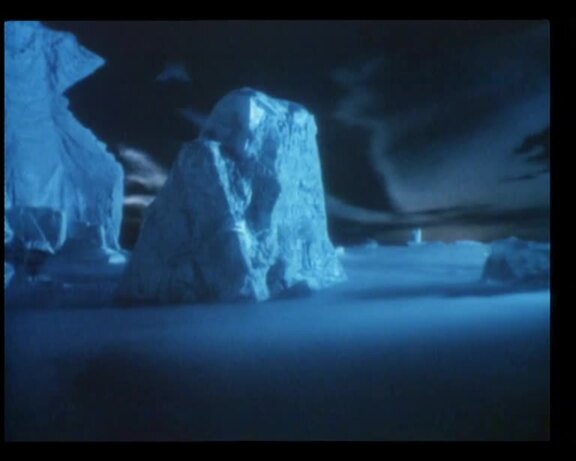
The disease that came to be known as AIDS (acquired immunodeficiency syndrome) was first reported in June 1981, with five cases in the US. Scientists later identified the virus that was infecting people with AIDS and this became known as HIV (human immunodeficiency virus). In the UK, gay and bisexual men were by some margin the worst affected demographic during the early epidemic, leading to a vicious homophobic backlash in parts of the tabloid media, who (inaccurately) dubbed it the ‘Gay Plague’. Television became an important platform for clinicians and LGBTQ+ activists fighting to counter misinformation and share safer sex messages. HIV/AIDS was routinely discussed in current affairs and news programming, investigative documentaries, educational films, dramas and artists’ film and video broadcast across terrestrial channels. In 1987, the British government belatedly launched a major public awareness campaign, AIDS: Don’t Die of Ignorance. This was led by the infamous ‘Iceberg’ and ‘Monolith’ adverts, produced by the Central Office of Information (COI) and voiced by actor John Hurt, who warned “anyone can get it, man or woman”. The arrival of effective combination therapy in the mid-1990s drastically slowed the death toll in Western nations, including the UK, where it’s estimated that at least 20,000 people have died of AIDS-related illnesses since 1981. The message today is that those living with HIV and on effective treatment cannot pass it on. Yet the need for vigilance remains, and to support those without access to healthcare and information: total deaths globally hit 40 million in 2021 and AIDS remains one of the world’s biggest killers, not least in Sub-Saharan Africa. The Terrence Higgins Trust offers support, advice and information on HIV and sexual health. Visit tht.org.uk, call THT Direct on 0808 802 1221 or email [email protected]. A directory of support organisations nationwide can be found at Find Your Four hivfindyourfour.co.uk

13 videos in this collection

Simple and devastatingly effective, a key advert from the UK's first major AIDS awareness campaign.
1

AIDS: Iceberg

2

AIDS: Condom Factory: Mrs Dawson

3

AIDS Helpline

4

Generation 21 [03/10/96]

5

About AIDS: Teaching to Care - Third Ground

6

The Truth about AIDS

7

Free needles and syringes against AIDS

8

Conference on AIDS Helplines

9

Ask Anne

10

Before Stonewall: Charlie's Interview Clip 1 of 1

11

Before Stonewall: Michael's Interview Clip 1 of 3

12

Before Stonewall: Michael's Interview Clip 2 of 3

13

Before Stonewall: Michael's Interview Clip 3 of 3

View full collection