Before Stonewall: Charlie's Interview Clip 1 of 1

From the collection of

Screen Archive South East at the University of Brighton
Screen Archive South East at the University of Brighton collects, preserves, catalogues and provides public access to its collection of films and magic lantern slides. The collection charts the rise of screen culture in the region and the nation and captures many aspects of life, work and creativity in the South East from the late 19th century to the present day. It is available for research, screenings, creative re-use and commercial access.

Before Stonewall: Charlie's Interview Clip 1 of 1

This video can only be viewed in libraries

Find your nearest library

Charlie remembers how AIDS engendered support, sometimes from the most surprising directions, despite the hostility of others.

In this extract, Charlie looks back on Pride's early years and at the havoc AIDS wrought in the 1980s.

The epidemic was really starting to bite when Charlie moved to the Labour Party from CHE - the Campaign for Homosexual Equality. Along with others determined to find a defensive response, he was surprised at the support received from lesbians, women in general and even the Thatcher government of the time.

Charlie recalls how testing for HIV became an issue, particularly when seeking mortgages and insurance; he and his partner, Donald, also submitted to testing in order to re-mortgage their home.

Looking back on happier times, Charlie remembers Pride events in London from 1975 onwards. Often held in November, early Prides were just marches - with a booze-up afterwards. Returning home from one event, the mini-bus he and his friends hired broke down, so, dressed in rather revealing shorts and a bit the worse for wear with drink, they joined another coach carrying a group of Roman Catholic ladies returning to St Teresa's Church in Filton.

Charlie reflects on how Pride events today have changed. The camaraderie of earlier decades has gone, and there is little sense that one's fellow marchers shared similar experiences to oneself; of discrimination, losing jobs and family rejections. The modern events, Charles says, are just like rock concerts and geared to the young, who now make up most participants and older gays feel squeezed out.

On reflection, Charlie feels that coming out in 2002, is much easier than it ever was in the past, because there are now so many ways for gay people to contact and meet one another. Charlie's small part in that change was to be honest, out and visible as a gay man, especially at work, so that everyone could approach him.

Charlie was born in the Scottish Borders in about 1950, to parents who were quite liberal in their thinking.

Charlie went to university in Edinburgh, where he shared a flat in his second year with Ian, who was an activist for gay rights in Scotland. At the time, homosexual activity between consenting adults was still illegal since the 1967 Act only applied in England and Wales.

Charlie has remained a lifelong politically active campaigner joining the Campaign for Homosexual Equality and was also involved in raising funds for the defence of Gay News during the blasphemy libel case brought about by Mary Whitehouse.

Charlie moved to Bristol in 1975 and worked in the city's social services for twenty-five years, concentrating on HIV and AIDS activism from the mid-80s. He met his partner, Donald, in Bristol and they maintain an open relationship. He has also fathered a son, with a lesbian friend.

Tags

From the collection

The AIDS Crisis

How television fought to counter misinformation related to the HIV/AIDS epidemic in the 1980s and 1990s
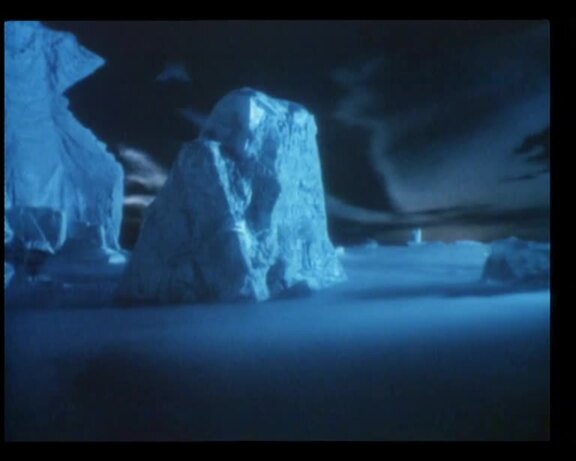
The disease that came to be known as AIDS (acquired immunodeficiency syndrome) was first reported in June 1981, with five cases in the US. Scientists later identified the virus that was infecting people with AIDS and this became known as HIV (human immunodeficiency virus). In the UK, gay and bisexual men were by some margin the worst affected demographic during the early epidemic, leading to a vicious homophobic backlash in parts of the tabloid media, who (inaccurately) dubbed it the ‘Gay Plague’. Television became an important platform for clinicians and LGBTQ+ activists fighting to counter misinformation and share safer sex messages. HIV/AIDS was routinely discussed in current affairs and news programming, investigative documentaries, educational films, dramas and artists’ film and video broadcast across terrestrial channels. In 1987, the British government belatedly launched a major public awareness campaign, AIDS: Don’t Die of Ignorance. This was led by the infamous ‘Iceberg’ and ‘Monolith’ adverts, produced by the Central Office of Information (COI) and voiced by actor John Hurt, who warned “anyone can get it, man or woman”. The arrival of effective combination therapy in the mid-1990s drastically slowed the death toll in Western nations, including the UK, where it’s estimated that at least 20,000 people have died of AIDS-related illnesses since 1981. The message today is that those living with HIV and on effective treatment cannot pass it on. Yet the need for vigilance remains, and to support those without access to healthcare and information: total deaths globally hit 40 million in 2021 and AIDS remains one of the world’s biggest killers, not least in Sub-Saharan Africa. The Terrence Higgins Trust offers support, advice and information on HIV and sexual health. Visit tht.org.uk, call THT Direct on 0808 802 1221 or email [email protected]. A directory of support organisations nationwide can be found at Find Your Four hivfindyourfour.co.uk

13 videos in this collection

Simple and devastatingly effective, a key advert from the UK's first major AIDS awareness campaign.
1

AIDS: Iceberg

2

AIDS: Condom Factory: Mrs Dawson

3

AIDS Helpline

4

Generation 21 [03/10/96]

5

About AIDS: Teaching to Care - Third Ground

6

The Truth about AIDS

7

Free needles and syringes against AIDS

8

Conference on AIDS Helplines

9

Ask Anne

10

Before Stonewall: Charlie's Interview Clip 1 of 1

11

Before Stonewall: Michael's Interview Clip 1 of 3

12

Before Stonewall: Michael's Interview Clip 2 of 3

13

Before Stonewall: Michael's Interview Clip 3 of 3

View full collection