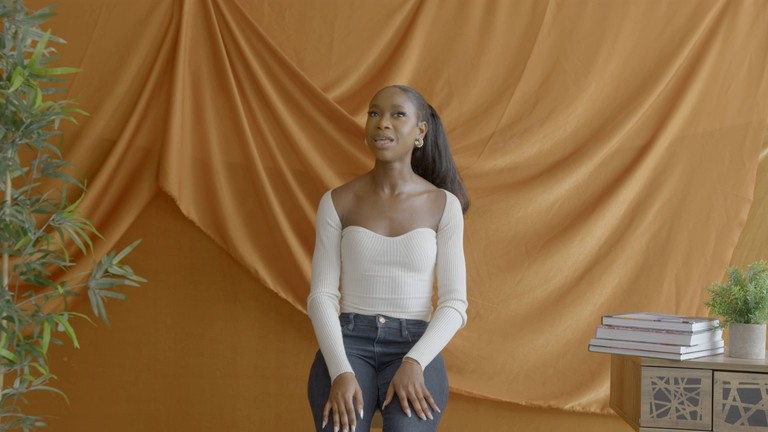
Interview with Norma Best: Part One
- Nottingham
- 1990
"How many famous Black women can you name who aren't either sportswomen or entertainers?" Mostly the folks of Liverpool draw a blank - making the point that too little is known or taught about Black women.
This educational video produced by Ann Carney and Barbara Phillips for the Black Women’s Media Project and WITCH (Women’s Independent Cinema House) uses vox pops with people on the streets of Liverpool to reveal the lack of representation in media and education for Black women, stories and history. Then, to redress the balance, the video features profiles of revolutionary Black women whose stories deserve to be taught, including American activist and abolitionist Harriet Tubman.
Celebrating the lives and stories of Black British communities...
For decades, the lives of Black British people have been presented on our screens through a white cultural lens, resulting in stories related to these communities being skewed, sensationalised, skimmed over, or simply ignored altogether. However, generations of community groups and grassroots filmmakers have worked to redress that balance, creating works that communicate their own experiences and perspectives on life in Britain, while capturing the stories of their neighbours, relatives and elders.
This collection brings together examples of this important community work, including oral history interviews from the Black Cultural Archives, the Brixton-based institution set up in 1981 to combat “a lack of popular recognition of, and representation by people of African and Caribbean descent in the UK”. These personal stories sit alongside works produced by initiatives such as the Black Arts Video Project, Black Women’s Media Project and WITCH, which use documentary, performance and personal expression to explore themes of identity, memory and cultural history.
Individually, these works offer windows into the lives of others; taken as a whole, they create a living tapestry of community history, using video, independent filmmaking and regional television as an act of cultural activism.