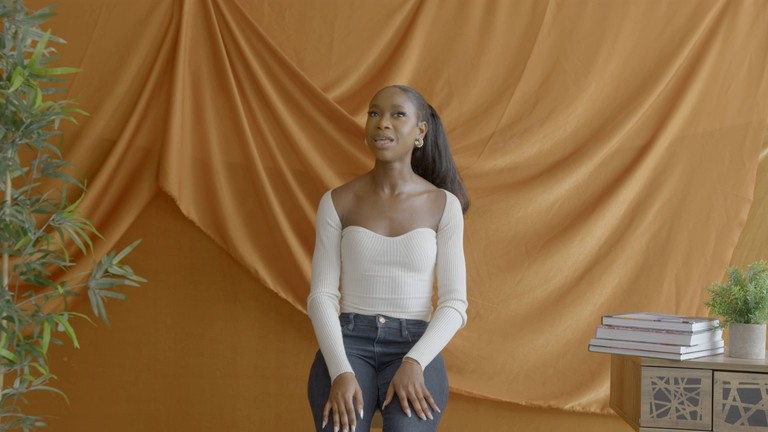
Interview with Norma Best: Part One
- Nottingham
- 1990
Documentary following a Liverpool based youth theatre and dance company as they produce their rendition of Cinderella
Realising the lack of opportunity and local spaces for youth to express creativity, Marcia Davis - at only 19 years of age - decided to create theatre and dance company, Catalyst 1+2. Based in Liverpool and honouring her Jamaican heritage in her work, this intimate documentary invites us into the behind the scenes, cast profiles, dress rehearsals and production of her take on Cinderella, titled 'Ella'.
After deciding to shift away from plans to work in London, Davis instead directed focus towards her community and the local youth club in an attempt to make the study of performance arts more accessible. Little did she know this would open up doors for them to perform across schools and venues like the Royal Albert Hall, allowing this young team to showcase their skill, passion and talent on the big stage. The collaborative nature of Catalyst 1+2 is highlighted throughout this piece and is something to be celebrated - taking on a classic tale known and loved by many and presenting a reimagined piece that reflects the experiences of their community, Davis' dedication to her craft is nothing short of admirable!
Celebrating the lives and stories of Black British communities...
For decades, the lives of Black British people have been presented on our screens through a white cultural lens, resulting in stories related to these communities being skewed, sensationalised, skimmed over, or simply ignored altogether. However, generations of community groups and grassroots filmmakers have worked to redress that balance, creating works that communicate their own experiences and perspectives on life in Britain, while capturing the stories of their neighbours, relatives and elders.
This collection brings together examples of this important community work, including oral history interviews from the Black Cultural Archives, the Brixton-based institution set up in 1981 to combat “a lack of popular recognition of, and representation by people of African and Caribbean descent in the UK”. These personal stories sit alongside works produced by initiatives such as the Black Arts Video Project, Black Women’s Media Project and WITCH, which use documentary, performance and personal expression to explore themes of identity, memory and cultural history.
Individually, these works offer windows into the lives of others; taken as a whole, they create a living tapestry of community history, using video, independent filmmaking and regional television as an act of cultural activism.