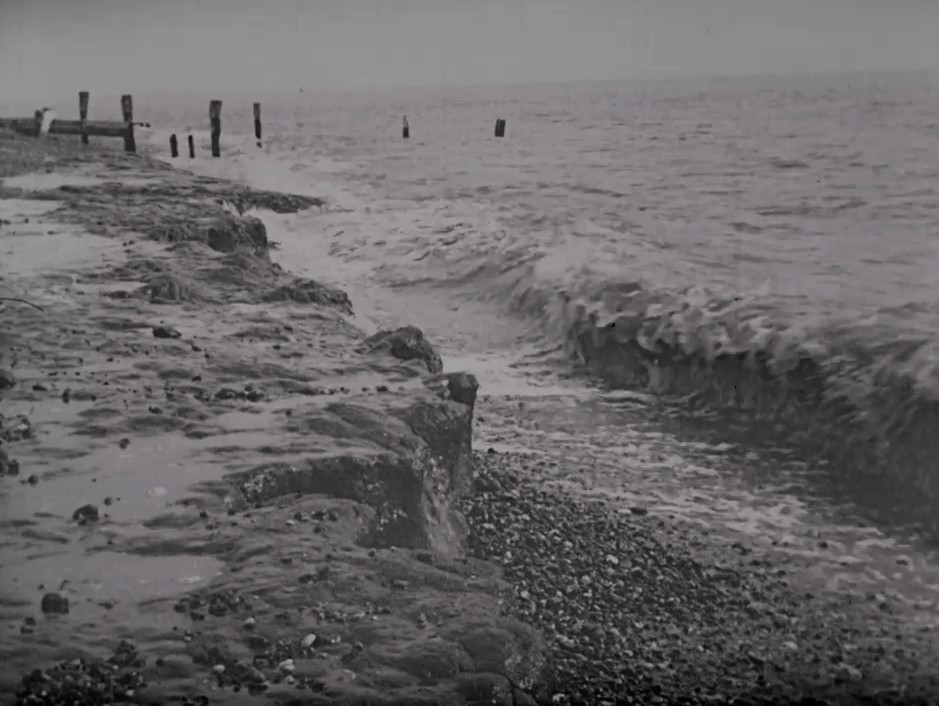
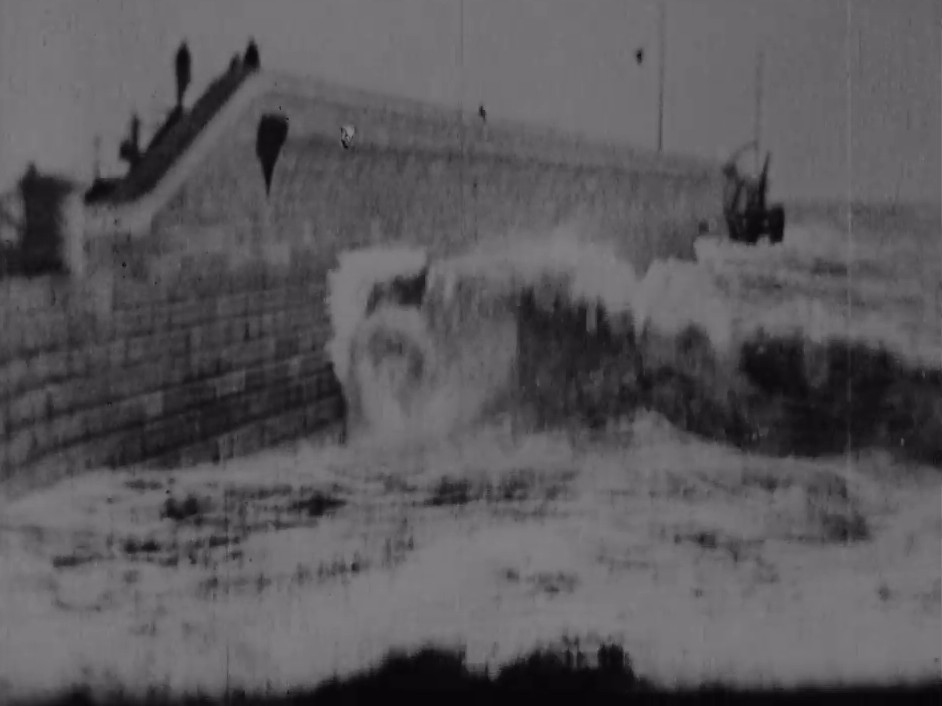
Rough Sea at Roker (1901)
- Roker
- 1901
A virtual Victorian paddle; Morecambe West End Pier stretches out in front as waves crash at your feet.
When amateur filmmaker William Henry Youdale set up his tripod on Morecambe beach in 1898, carefully framing the relatively new West End Pier in the background with the waves crashing majestically in between to give the scene movement, he probably made two discoveries. First, putting a tripod on an uneven surface requires some adjustment to keep the horizon level. Second, a good cameraman needs waterproof shoes...
Youdale was a draper from Cockermouth, who performed magic lantern shows and acquired an early cinematograph camera. Presumably while on the same trip he also filmed Morecambe Parade (1898) which is available on the BFI Player. A couple of years later, life on the pier was captured by Mitchell & Kenyon - see West End Pier, Morecambe (1901).
The 'sea wave' genre might be one of the more surprising genres to come out of early film. But for Victorian audiences there was something hypnotic about these compact studies of movement.
Surely most of us, if we've ever stood before the sea have found ourselves transfixed by the rhythms of gently lapping waves. The violent churn of a really rough sea gives us something else again - a real sense of the ocean's magnificent, sometimes alarming power.