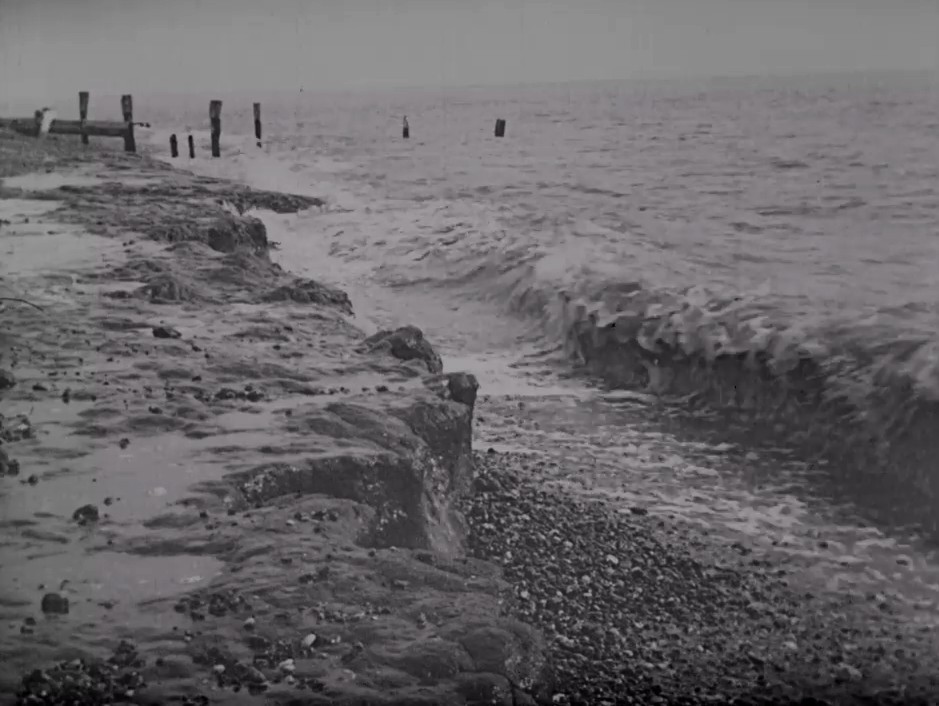
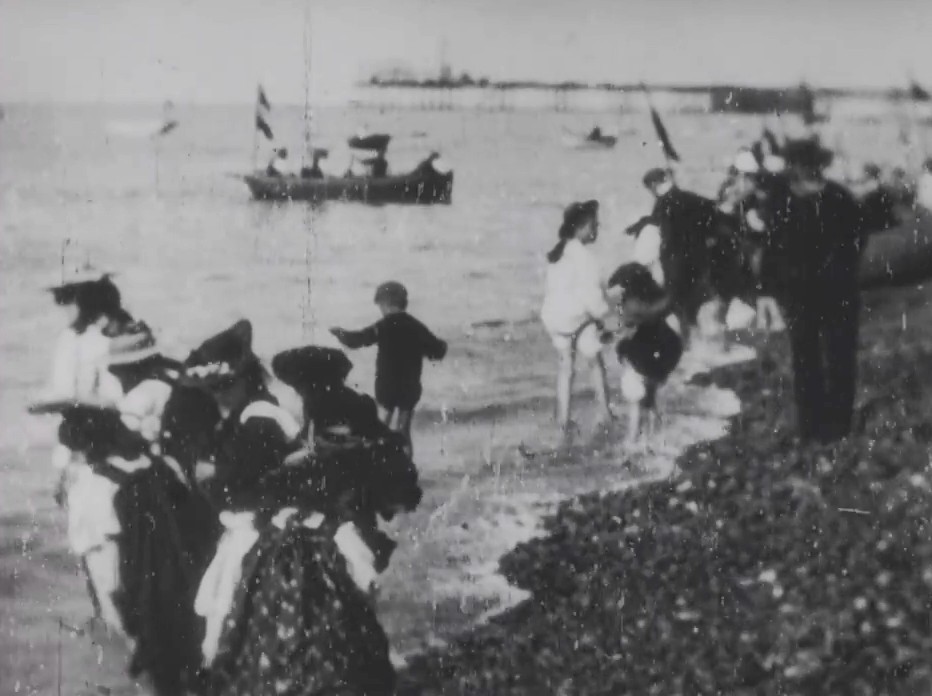
Incoming Tide
- Worthing
- 1898
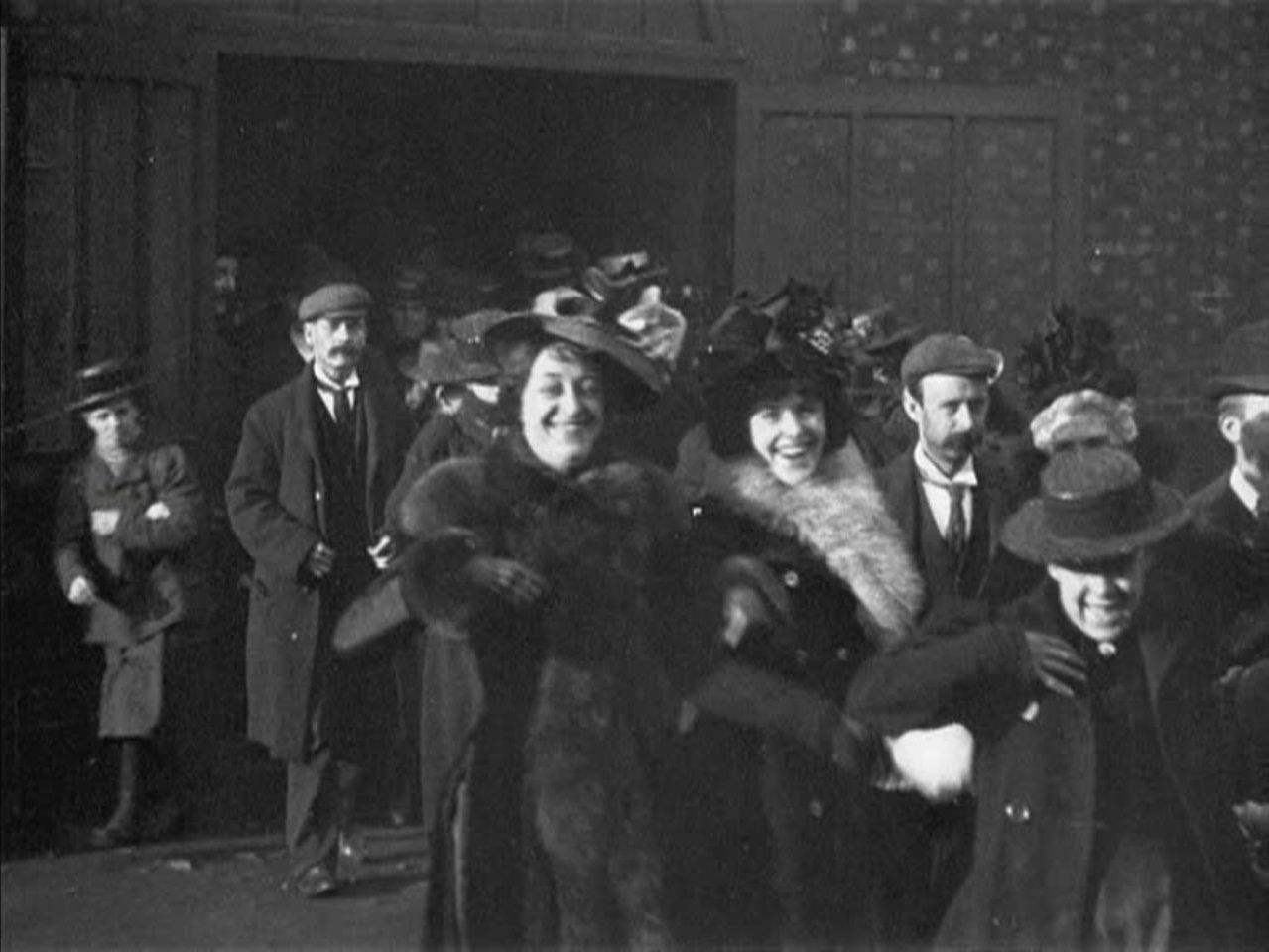
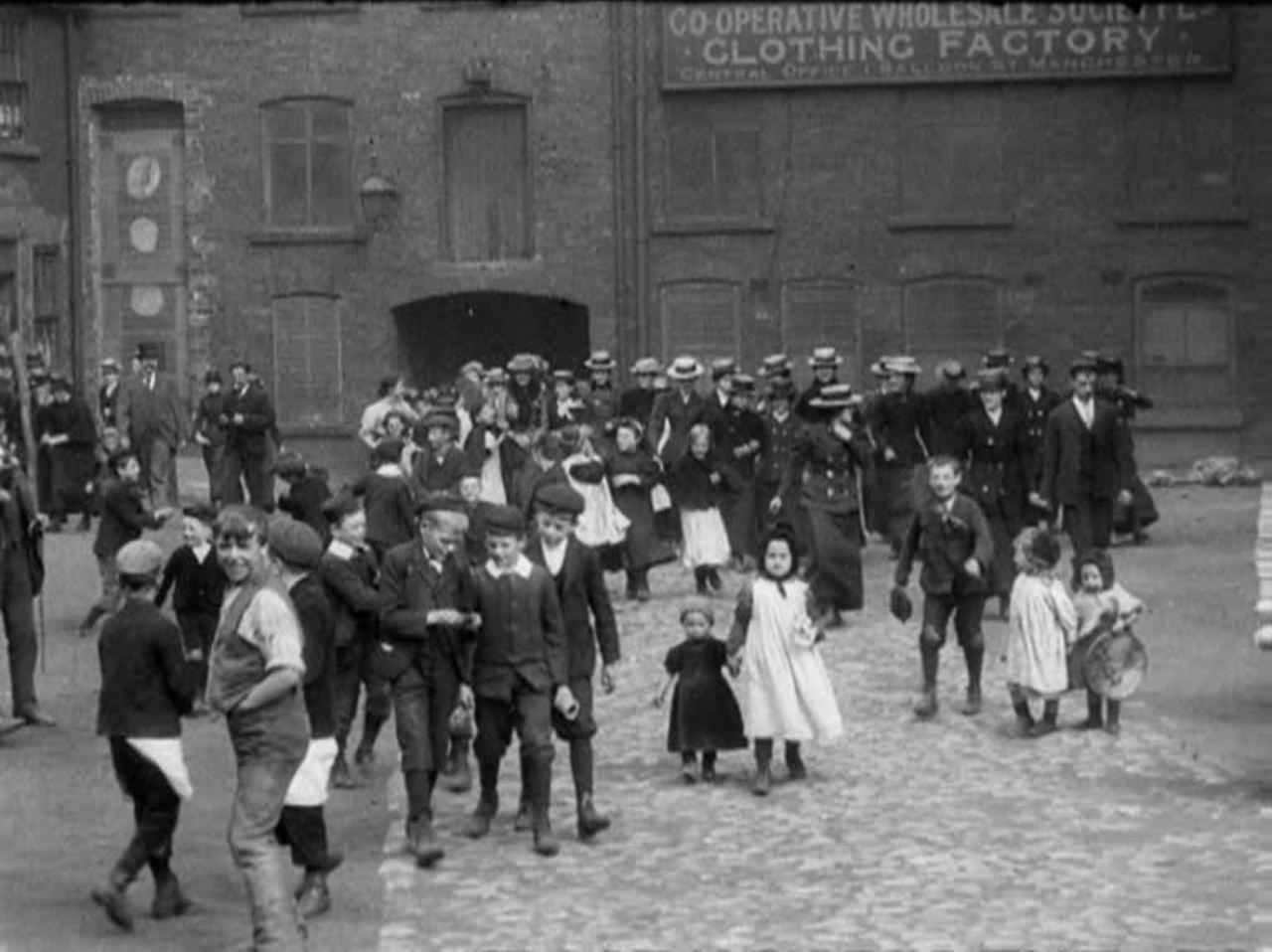
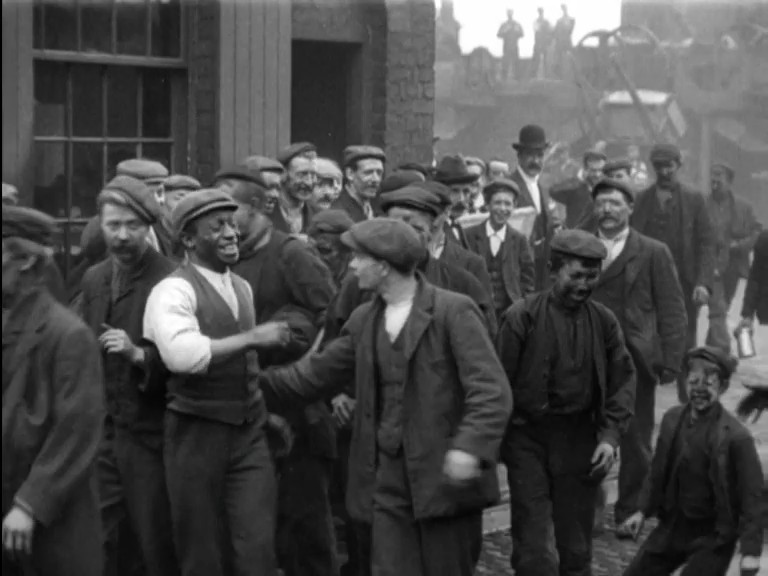
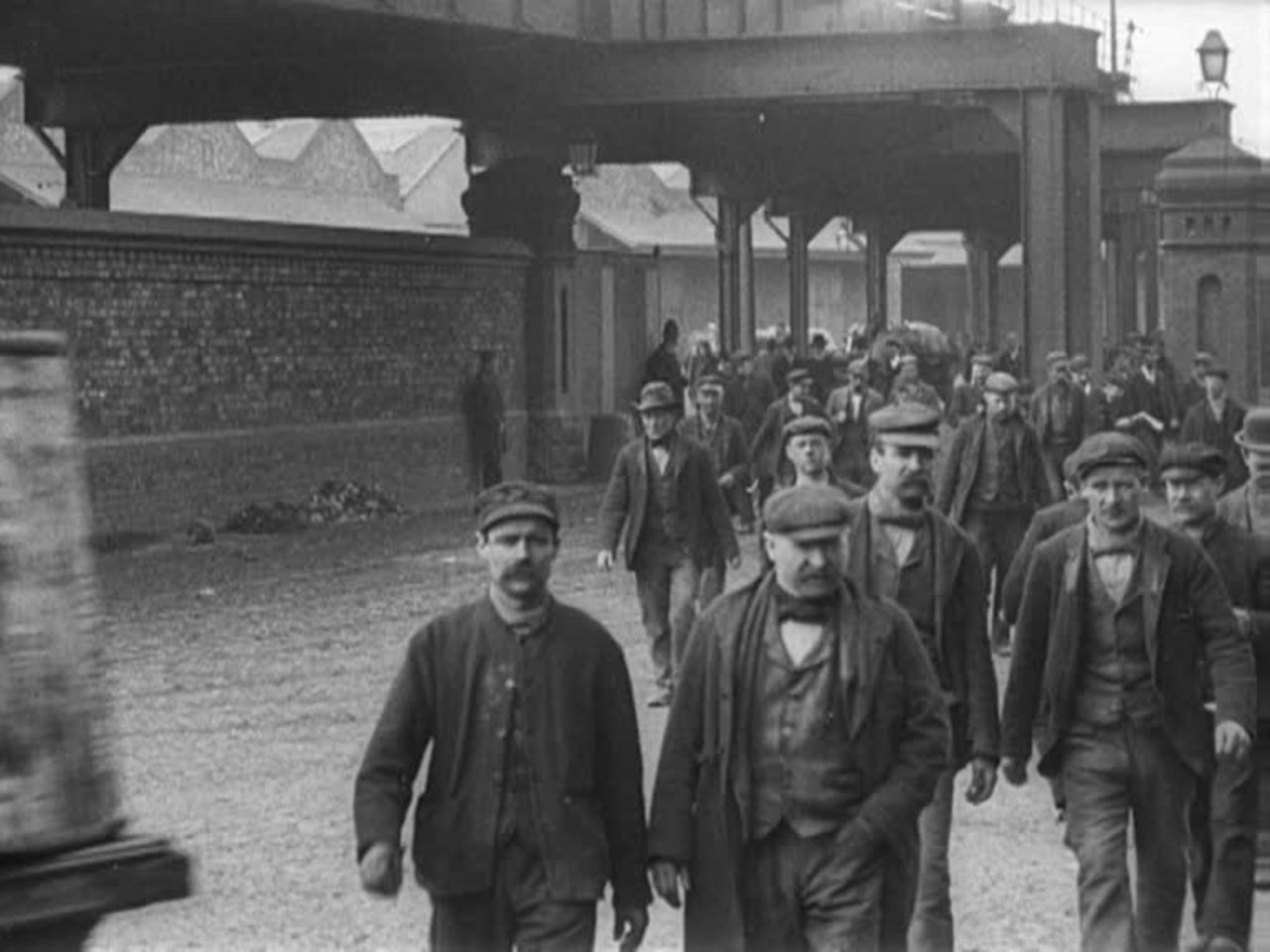
Workers are marshalled past the gate of one of Yorkshire's biggest steel firms.
Staging is common in Mitchell and Kenyon's 'factory gate' films. These workers at John Brown & Co.'s huge Sheffield ironworks are very obviously being chivvied past the camera by a smartly-dressed, bowler-hatted man - possibly Isaac Thomas, brother of regular M&K commissioner AD Thomas. In the concluding shot, an assortment of workers and children wave cheerfully to the camera.
Sheffield-born industrialist Sir John Brown (1816-96) was a major figure in the south Yorkshire iron trade. He founded his company in 1844, and opened the Atlas Works in Brightside in 1856: before the decade was out, the site had grown to 30 acres. Brown made his fortune making rails for the rapidly expanding rail network before turning to armour plate for the Royal Navy. He was knighted for services to British industry in 1867. Mitchell and Kenyon filmed the factory the year before Brown's merged with neighbouring Thomas Firth & Sons and began specialising in stainless steel manufacture. The company still exists as part of Sheffield Forgemasters, but the majority of the Atlas Works site was demolished in the 1980s.
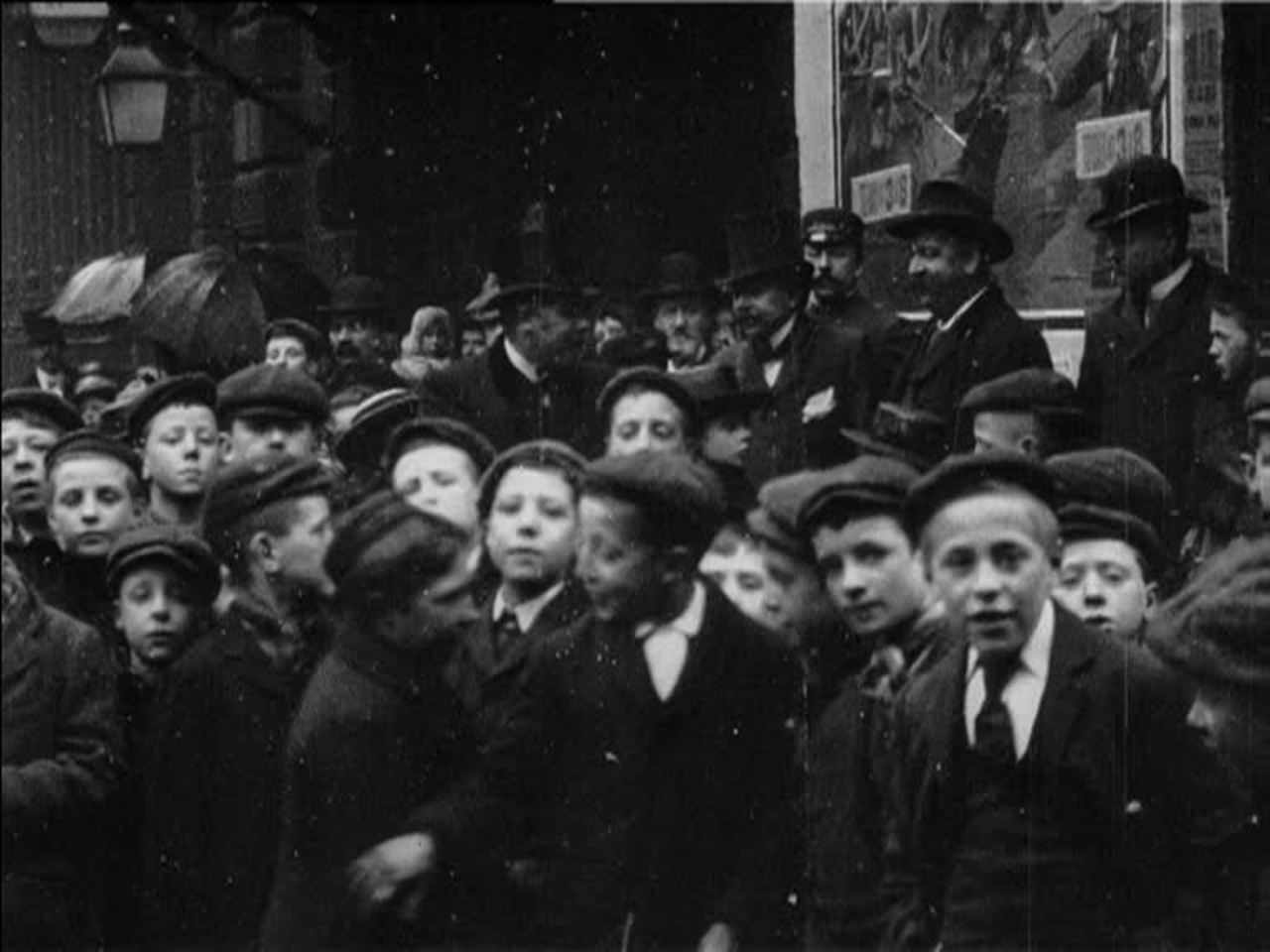
Vivid portraits of everyday Victorian life, thanks to the first generation of filmmakers to take to Britain’s streets.
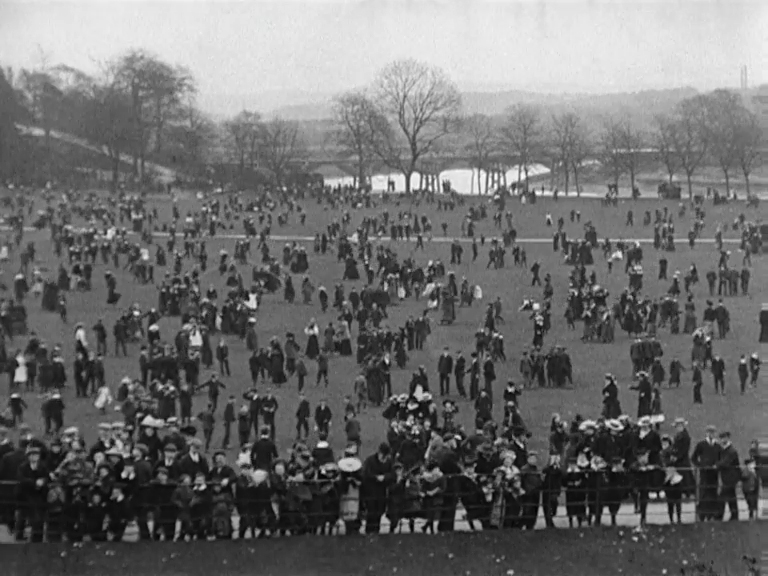
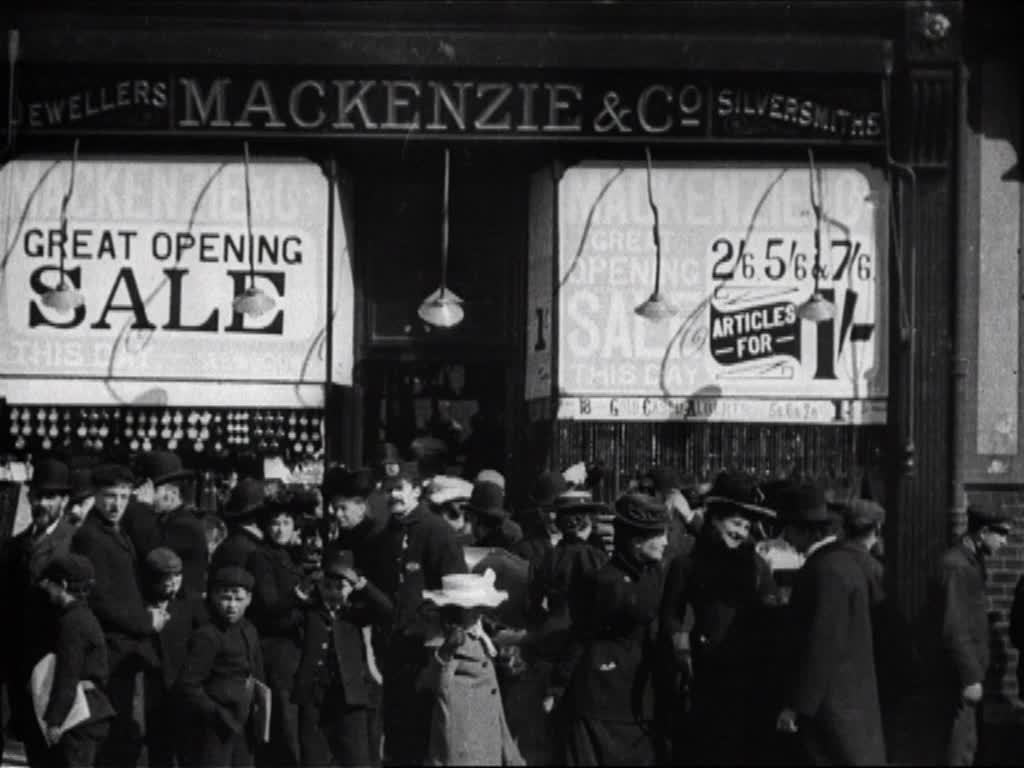
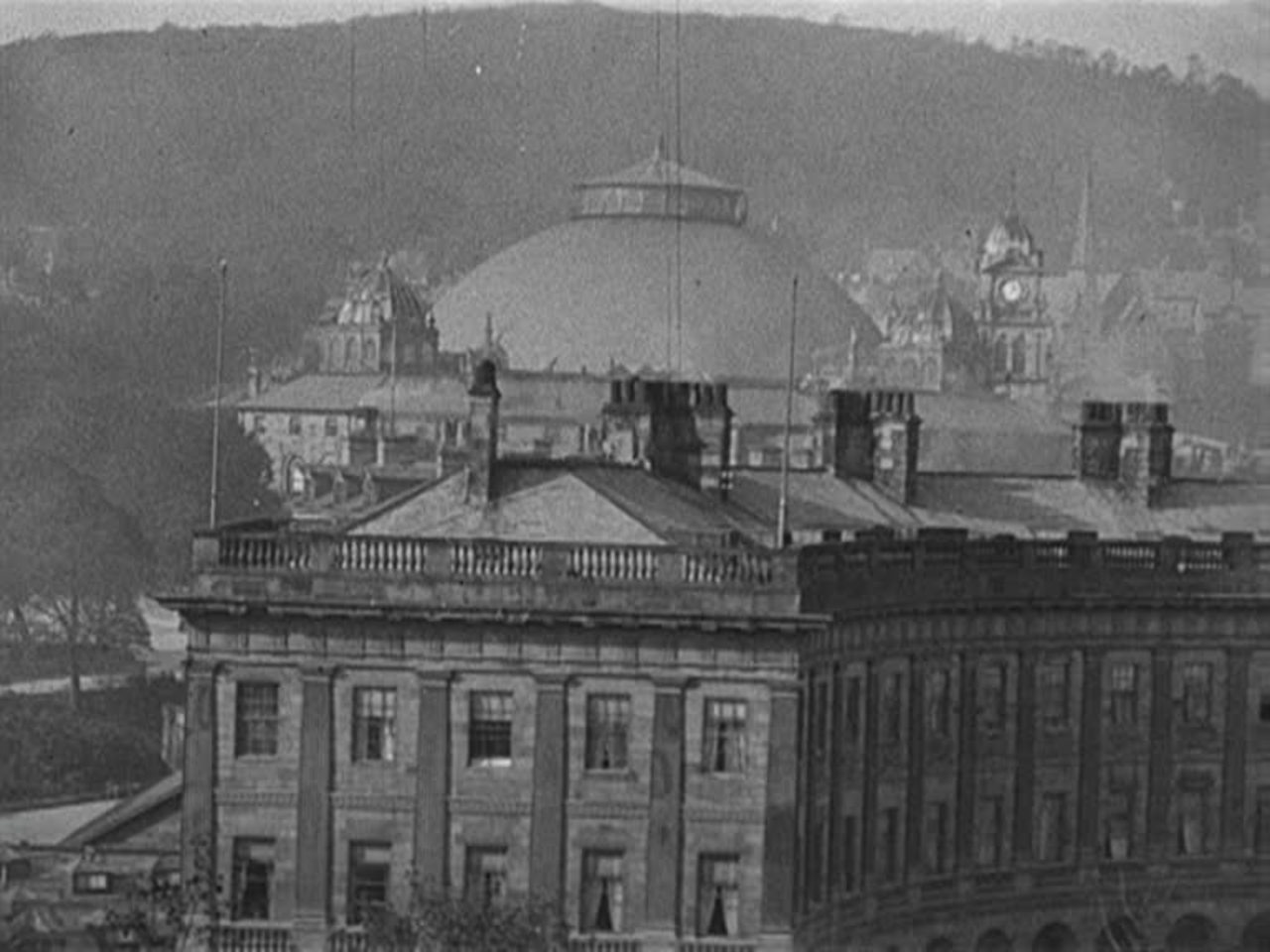
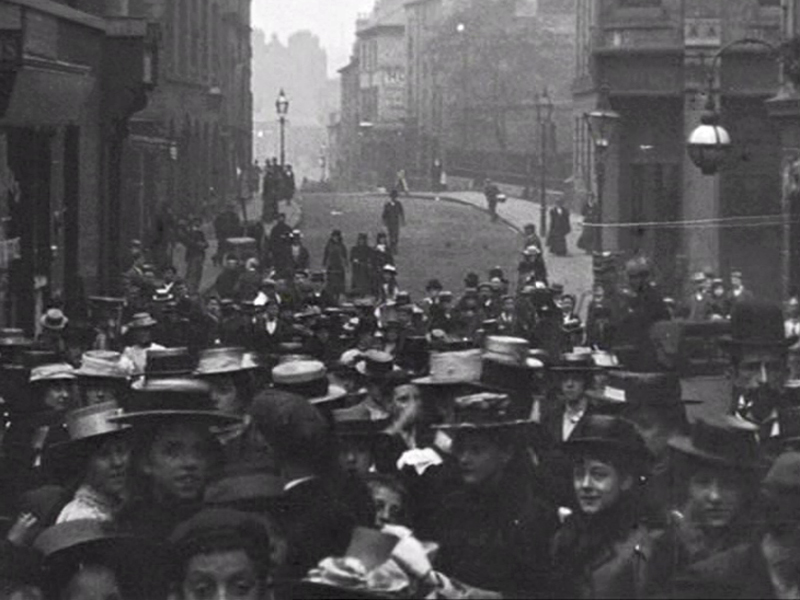
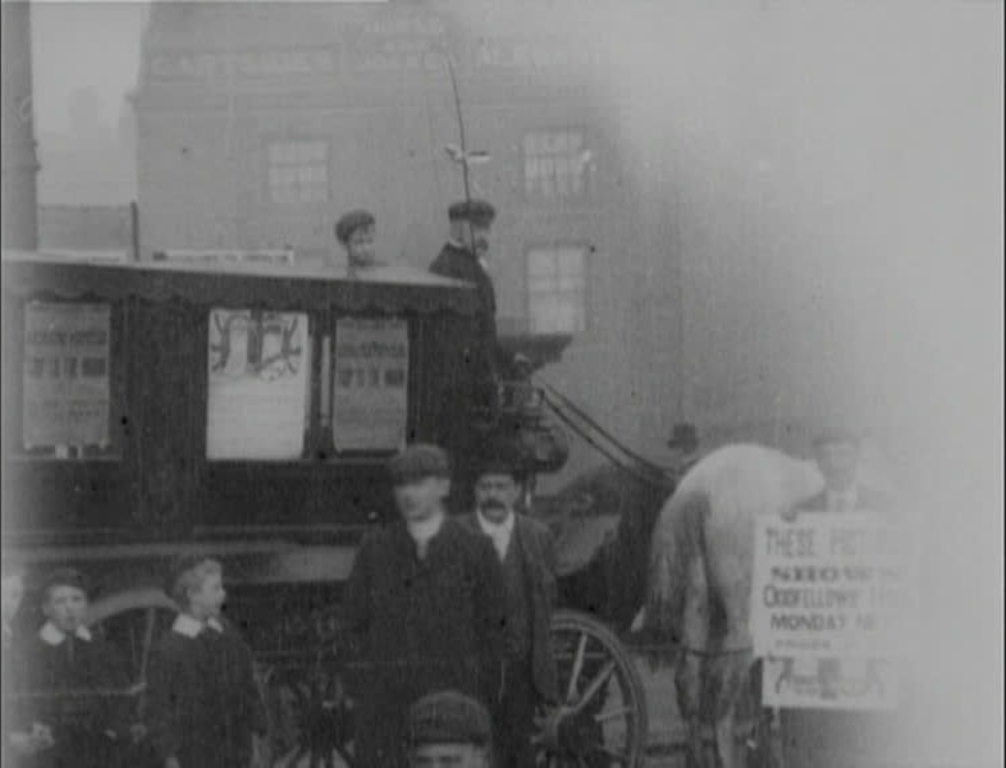
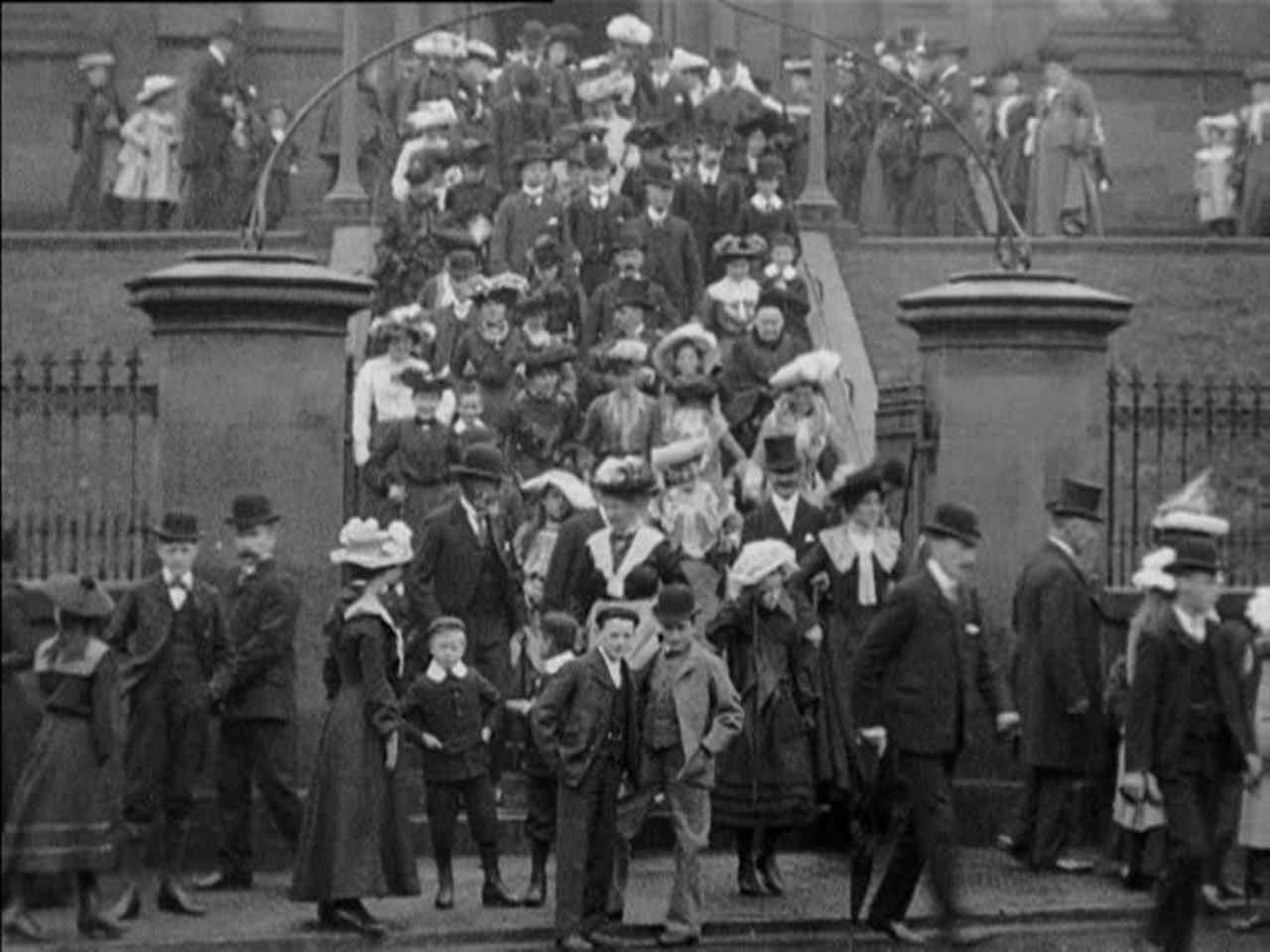
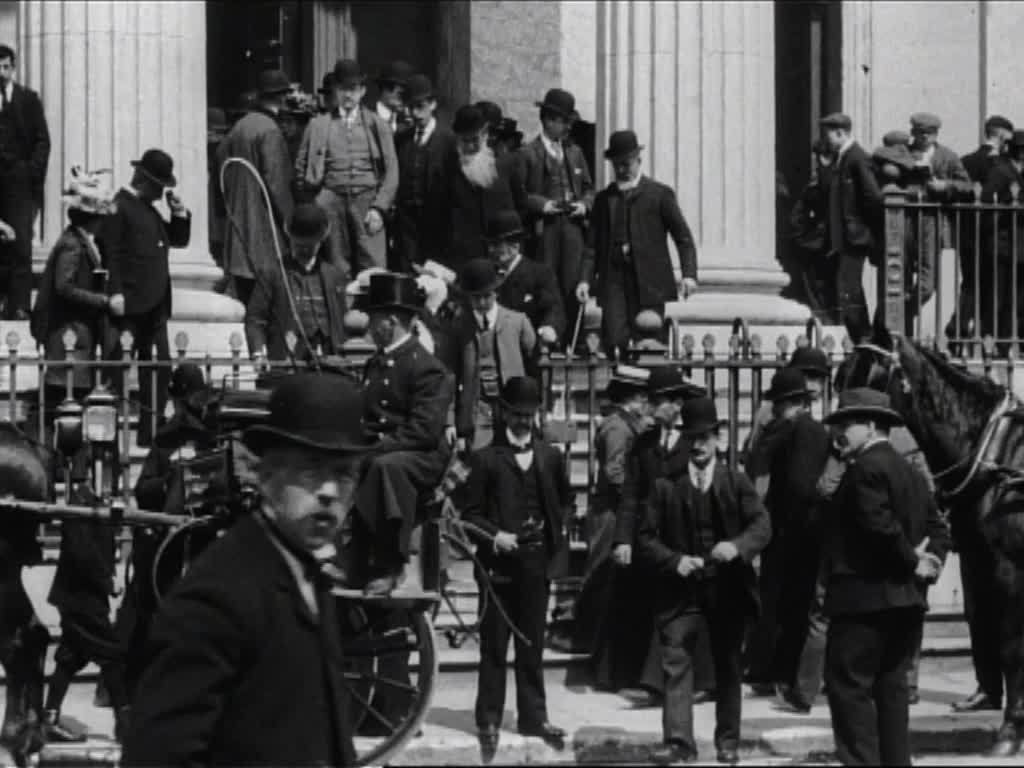
Some of the most fascinating of early films are those which are content to watch the world go by. Numerous filmmakers parked their cameras on street corners, in parks, on seaside promenades or outside workplaces or churches to capture fleeting moments of everyday life.
In their own day, these films held a mirror up to Victorian society. Today, these images of our ancestors – relaxed, smiling and laughing, gazing at us through the camera lens - are a gift of moving history. The offer us extraordinary insights into a lost world, more vivid than any still photograph or written account.